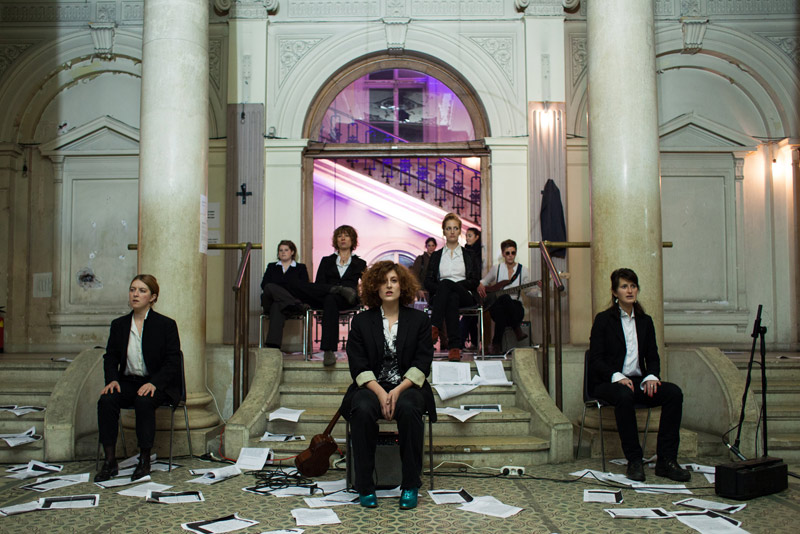
Timed just after the international take-off of the art season and before the winter cold hits the city, Vienna Art Week has established itself as one of the most noteworthy art weeks in Europe. With its eighth edition closing last Sunday, VAW delivered a programme full of openings in the city’s numerous art institutions, as well as studio visits, lectures, a film programme and guided tours, which continued smoothly into Vienna’s Gallery Weekend. Indeed, besides the plethora of exhibitions and openings, maybe the most strikingly refreshing characteristic of the VAW is the fact that everyone involved understands the importance of collaborating.
“The idea was to get all major art institutions to work together, including the art academy and the artist-run spaces, as well as the smaller museums, private museums and galleries as well” says Martin Böhm, President of Art Cluster Vienna, who initiated the Vienna Art Week almost a decade ago. “Vienna is an important city for fine art, and art is central to the city – historically and in the present. It is of course important that an international audience sees that, but also that the Viennese themselves realise the crucial role art plays for the city. For one week, art gets centre stage.”
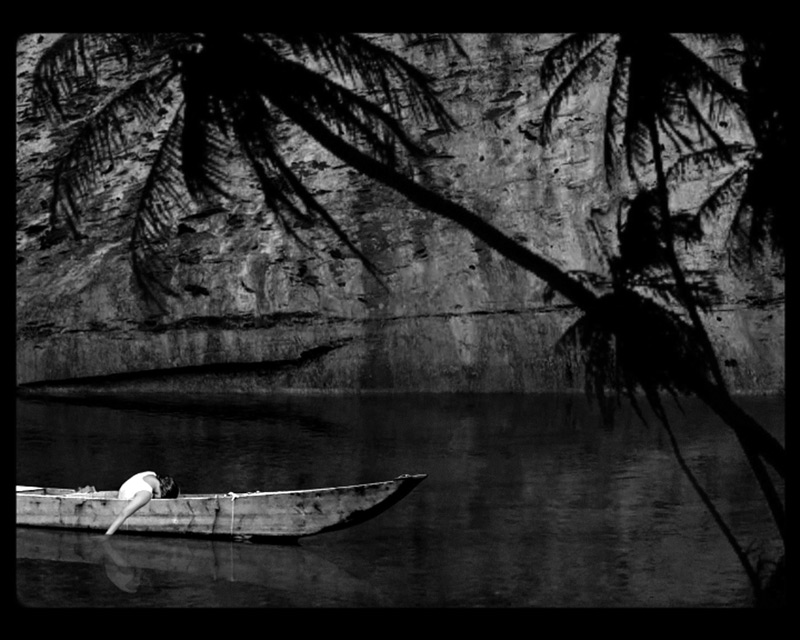
Robert Punkenhofer, Art Cluster’s Artistic director, curated the thematic show “Predicting Memories”. Installed in the former Telegraph Office, the group show includes works by artists like Sophie Calle, Ai Weiwei, Hans Op de Beeck and younger art world figures like Doug Fishbone. The imposing edifice itself, left untouched for decades, is haunted and crumbling, a stark contrast to Vienna’s otherwise tarted-up imperial buildings. The show explored the complex net of relations between the present and our understanding and processing of history, and raised questions about its effect on the future. A video installation by Doug Fishbone showed, for example, how visual stimulus is shaped by the media and interpreted according to social conditioning.
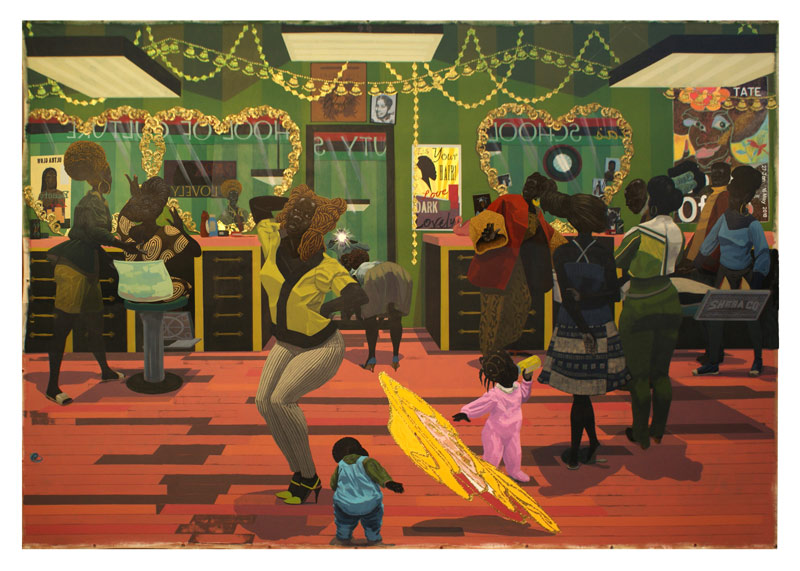
All around the city, major institutions joined with openings by renowned artists, like Kerry James Marshall at Secession. His show, “Who’s Afraid of Red, Black and Green”, fills the museum’s main hall with a new series of works, in which Marshall focuses on the social and cultural experience of African Americans using two key references: the flag of the Universal Negro Improvement Association, founded in 1920, and Barnett Newman’s famous painting Who’s Afraid of Red, Yellow and Blue.
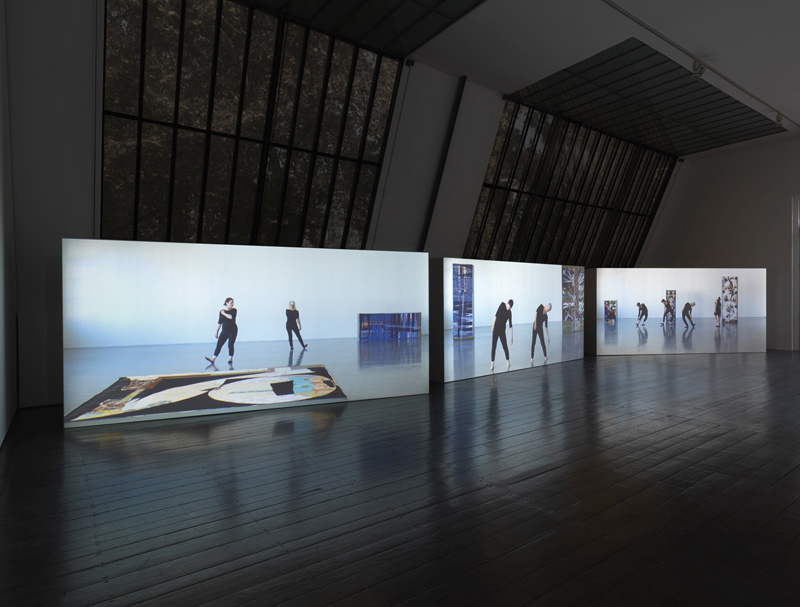
Other shows not to be missed – and the list is long – are Michael Borremans “Magnetics” at BAWAG Contemporary, and “Sharon Lockhart | No Eshkol” at TBA21. Photographer Sharon Lockhart, whose practice often involves the memorisation of specific moments in particular communities, presented a new work dedicated to the life and school of Israeli choreographer and textile artist Noa Eshkol. Lockhart discovered Eshkol, who died in 2007, during a trip to Israel in 2008, and the show, conceived as collaboration between the two, is a sensitive portrait of an important artist. Together with architect Avram Wachman, Eshkol is best known for developing a movement notation system in the 1950s. The system is used to this day to record and analyse movement in fields as various as dance, therapy and even the diagnosis of autism. The show “Sharon Lockhart | Noa Eshkol” includes a five-channel film installation showing Eshkol’s ageing students dancing to a metronome from a rigidly scripted system, sharing the space with Eshkol’s ornate textiles and images of the spheres used to analyse movement.
Belgian painter Michael Borremans paintings reflect mysterious, even puzzling situations that exude a sense of danger and morbidity. Human figures are painted in a pensive pose or semi-conscious state right in the middle of the composition. While their faces are largely obscured, the atmosphere is psychologically charged. The figures are captured in various stages of reverie so total as to negate the presence of the viewer. „Art has to be political, it has to be mysterious, and it has to be sensual“ Borremans told sleek. „I know a painting is finished when it creates a certain effect.“
The eighth edition of the Vienna Art Week may have ended, but many of the shows are still on view, and a visit is more than worth your while. We would not want to miss the ninth edition next year.