
For many people, there is one very specific fear of one very specific cringe situation: the moment you tell someone younger about a film you consider an absolute classic, only for them to stare back at you in confusion and say, “Never heard of it.” Within seconds, you suddenly feel incredibly old. And unfortunately, with every passing year, those moments become more and more likely. Luckily for those of us who are not Gen Alpha, there is also the opposite phenomenon. There are a few films that everyone knows. Really, everyone, regardless of age. And when I asked around, I noticed one thing: Legally Blonde (2001) is one of them.
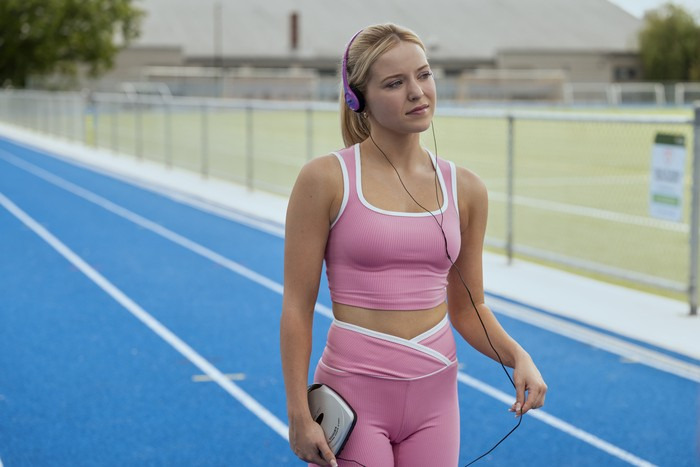
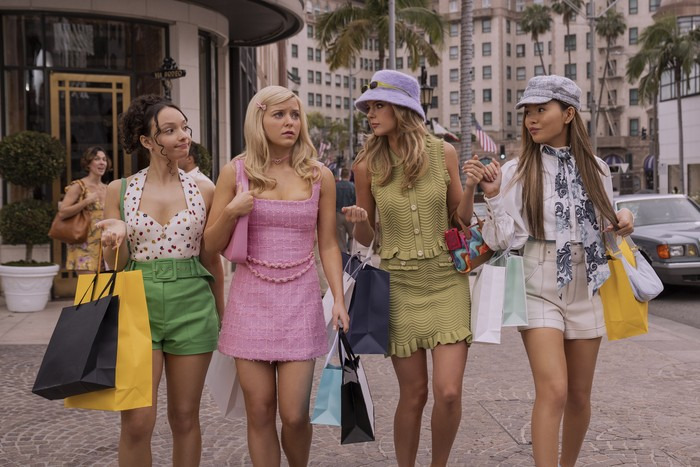
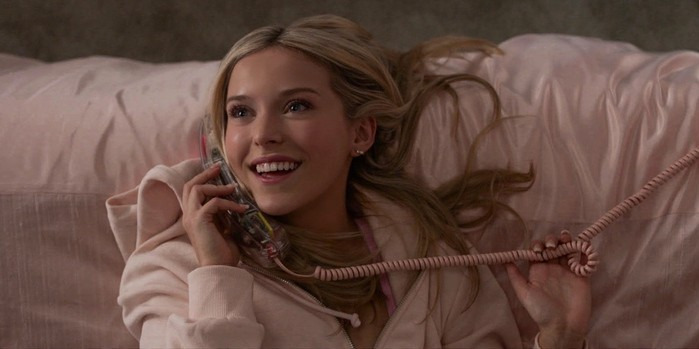
Now, more than two decades after it first premiered in cinemas, Amazon Prime has released a prequel series centred on Elle Woods during her high school years. Looking at the pink outfits, the blonde stereotypes and the theme of female self-determination, I started wondering what it is about this iconic, lovable and endlessly confident character that still feels so relevant today.
To give the answer away straight away, it has nothing to do with Y2K fashion. It has nothing to do with the (in my opinion) unnecessary commercial revival of old films. And it also has nothing to do with the timeless flirting technique, the bend and snap. You know, the one we learned alongside Jennifer Coolidge in the first film to help her win the man of her dreams.

Instead, we have to look at the bigger picture. I know, I know. I just said everyone knows this film, and I definitely believe that. But to answer that central pop-cultural question, we still need to remind ourselves who Elle Woods actually is and what her story is about. So here we go:
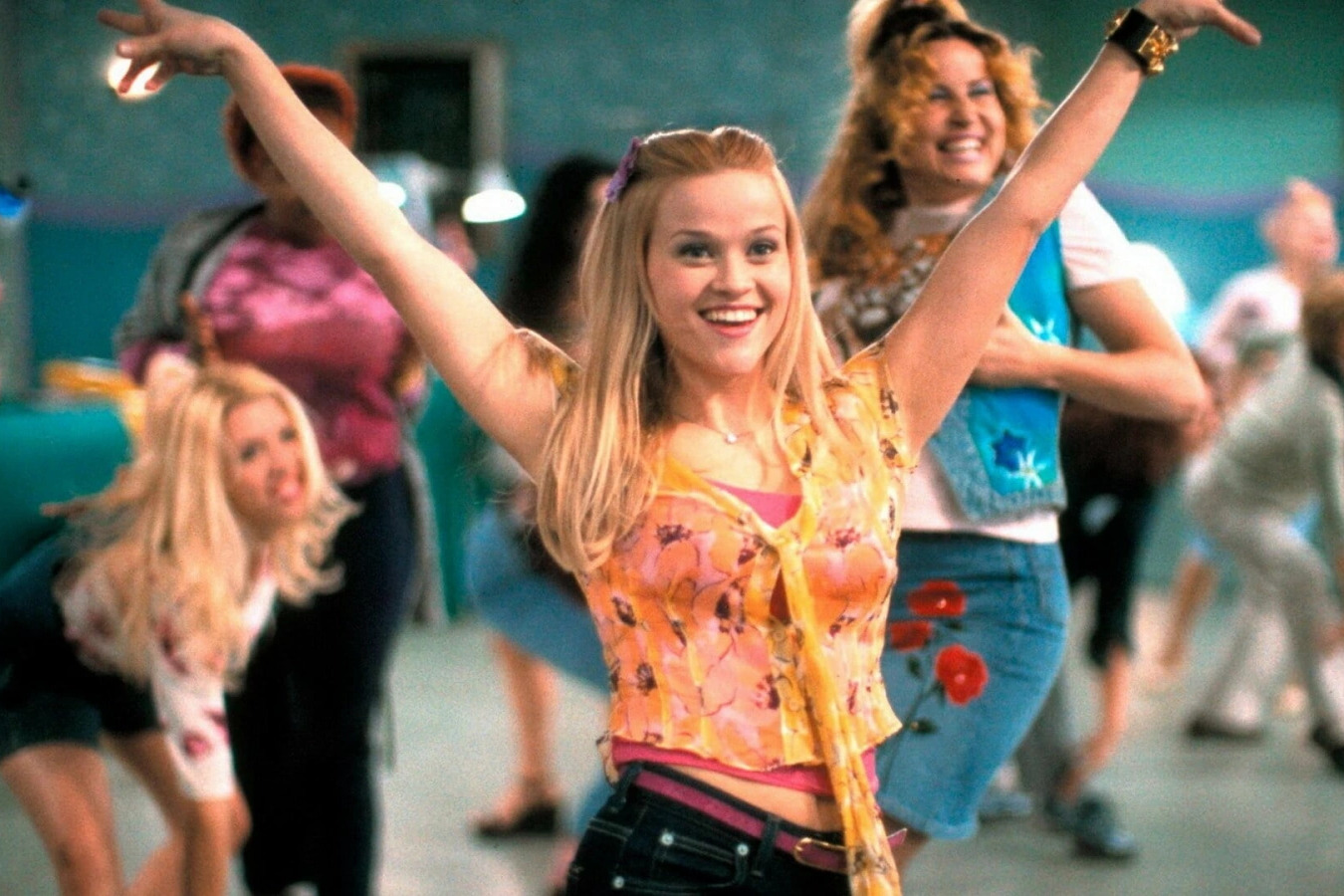
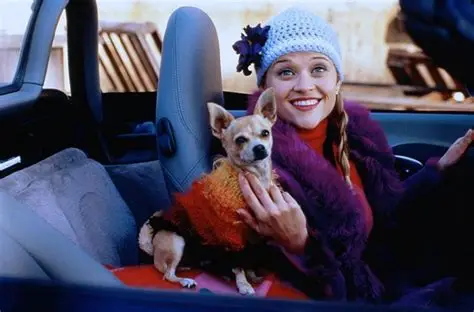
Unter Legally Blonde, Elle is about to graduate from college. She is popular. She is president of her sorority. She is pretty, fun, sexy, a girl’s girl and, of course, blonde. She is also convinced that her boyfriend Warner is about to propose. But before her perfectly planned future can unfold, Warner breaks up with her because she is “too blonde”. Translation: too shallow, not ambitious enough and not intelligent enough to become the wife of a future Harvard lawyer.
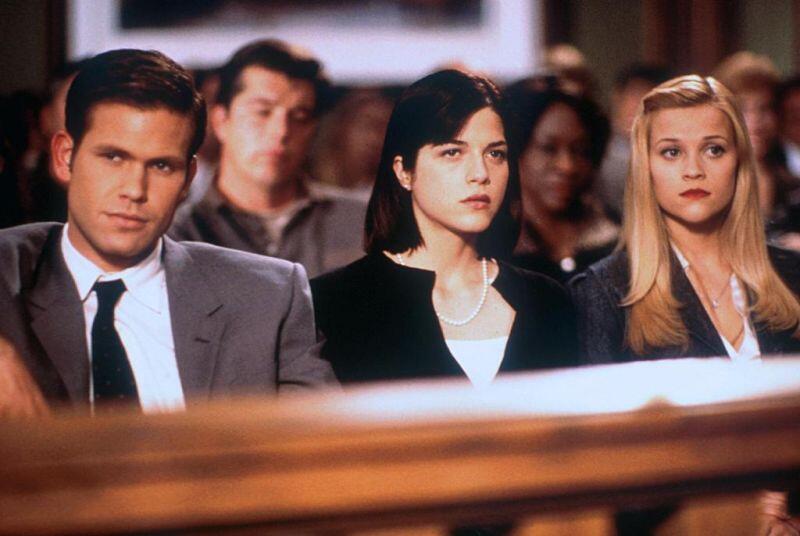
Determined to prove him wrong, Elle decides to get into Harvard Law School herself. She is accepted, despite receiving smiles from the admissions board that are somewhere between patronising and sexually intrigued. Before long, she becomes one of the top students in her class and ultimately solves a murder case, not by changing who she is, but by staying true to herself.
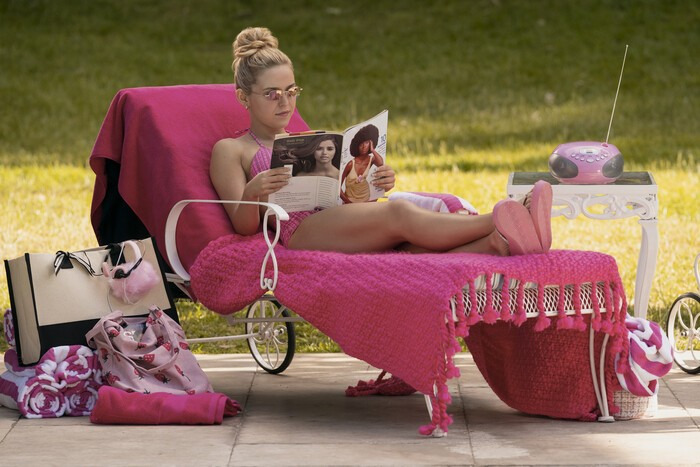
The prequel series Elle, on the other hand, follows a much younger Elle as she navigates teenage friendships, first love, difficult parents and the challenge of staying confident in a world that can be exhausting and cruel. In other words, it tells the story of how she becomes the woman we meet in the 2001 film.
And this is finally where we have to look at the bigger picture. Throughout her journey, Elle is underestimated again and again. She is reduced to her appearance. She is smiled at rather than listened to by the men around her. She is rarely taken seriously. She is desired, yes, but often only in ways that benefit the men surrounding her. Even the professor who initially appears to believe in her eventually expects sexual favours in return for his support. Because for anything else, she is too pink. Too blonde. Too bubbly.
Vivian, Warner’s later fiancée, represents a different version of womanhood. She is strict, quiet, intelligent and socially acceptable. Both women reflect different expectations that society places on women. Elle is the woman every man wants to have. Vivian is the woman everyone wants to keep. Both spend much of the story trying to fit into roles shaped by a patriarchal society, instead of asking who they actually want to become.
And since 2001, that has not changed nearly as much as we might like to think. To bring in a few hard facts, here are some figures published and verified by WorldMetrics at the beginning of this year: Only 31% of law school graduates worldwide are women. And of course, we have to be realistic. There are many reasons for this, depending on people’s economic backgrounds, the support they receive and the barriers they face. But one of the biggest reasons is hidden behind one of the nicest sounding expressions for unpaid labour: care work.
For example, 60% of female lawyers in the United States say they struggle to balance work and family responsibilities. And before someone jumps in at this point, let me stop them right there. No, this is not because women are somehow weaker or less capable than men. According to the German Federal Ministry for Education, Family Affairs, Senior Citizens, Women and Youth, women in Germany spent around 43% more time on unpaid care work than men in 2025. Every single day.
And this is far from being a uniquely German problem. In the United States, 45% of women working as lawyers have reduced their working hours because of caregiving responsibilities. What all of this shows is that, even in 2026, a confident female lawyer is still not nearly as ordinary as we might like it to be. And these statistics do not even take appearance into account.

I could keep going. Women working in law, for example, receive bonus payments that are around 15% lower than those of their male colleagues. And outside the legal profession, Germany counted 17.2 million men in full-time employment in 2025, compared with just 9.3 million women.
But before your head starts spinning from all the statistics, let me bring in another thought. Because I am tired of women not being taken seriously. And I think many of you are too. Especially the women reading this probably know exactly what I mean: You know what it is like to be the person in charge at work, only for everyone to trust the nearest male colleague instead. Whether it is an idea, a decision, a suggestion or a problem, the moment a man says exactly the same thing, people suddenly pay attention. A woman can easily be ignored.
The most recent example I have seen of this structural behaviour actually did not come from real life, but from the Amazon Prime series Off Campus. Yes, the one everyone seems to be obsessed with. For anyone who has not seen it, Hannah, the main character, has a crush on this singer of a local rock band. He barely notices she exists. When she tries to approach him, he hardly even looks at her. But the second Garrett, the popular hockey star, pretends to be her boyfriend, everything changes. Suddenly the singer is interested. Simply (and primitively), because another man has validated her. And to me, that perfectly reflects this wider pattern of when society chooses to take women seriously and when it does not.
Off Campus is, of course, a relatively harmless example. But the structure I am talking about can become genuinely dangerous. So where am I going with all of this? Elle Woods, both in Legally Blonde and now in the prequel series, remains an incredibly important role model. Because since 2001, the world has not exactly become easier for women. Care work. The gender pay gap. Expressions like “man keeping”, “male loneliness epidemic” and “Alpine divorce” circling around the internet. You name it.
And that is exactly why stories like Elle’s do indeed still matter. Again, forget about the pink outfits. Forget about the Y2K aesthetic. And forget about the bend and snap (although, admittedly, it still works). No, they matter because Elle reminds us that femininity and competence have never been opposites. That being kind does not make you weak. That loving pink does not make you less intelligent. And that confidence is not something you have to earn by becoming someone else. That was true in 2001, and it is still true in 2026.
So, in my opinion, Legally Blonde is much more than just a great comedy. In my opinion, people still remember it because, more than twenty years later, Elle is still fighting battles that women are fighting every single day. And maybe that is the real reason everyone, no matter their age, still knows who Elle Woods is.