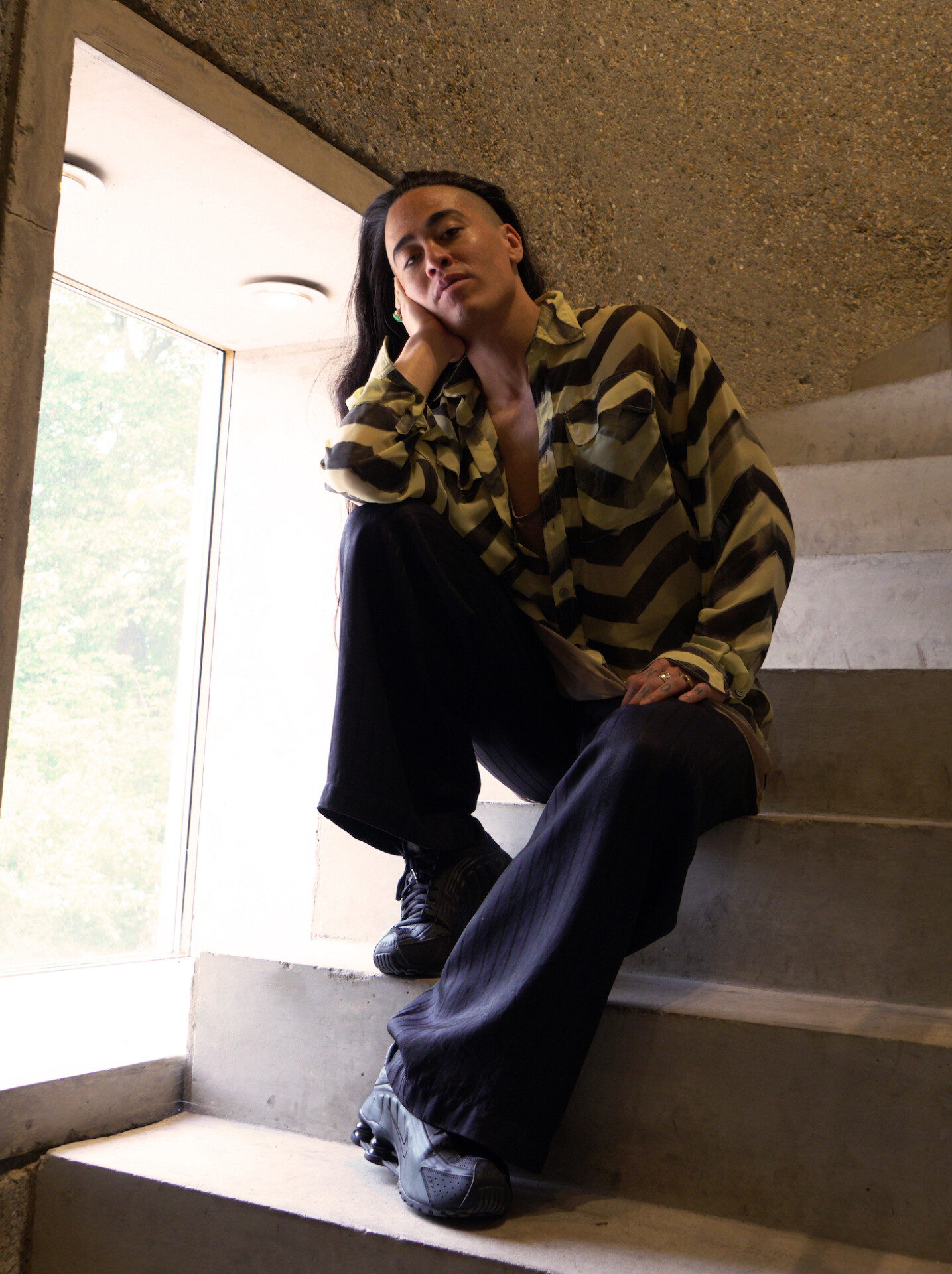
Wu Tsang. Photo: Tosh Basco, 2019
As American artist and 2018 MacArthur Genius Grant award winner Wu Tsang’s new film One Emerging From A Point of View (2019) reaches its final sequence, the screen sinks into deep blue. The scene—of an underwater otherworld—is embroidered with twinkling sea creatures glittering like Christmas lights, before a mermaid-like figure swims into view and an ornate fishing boat glides on screen. It is magic.
A magical quality pervades Tsang’s largest exhibition to date, There is No Non-Violent Way to Look at Somebody, currently on view at Berlin’s Gropius Bau. In her earlier video work, Girl Talk (2015)—also on view—light gleams in rainbow multitudes through crystals hanging from the trees; the sequence is made real in the following room as crystals dangle from the ceiling at different lengths, light catching in spectacular streams. Perhaps, magical is the wrong word—but as light illuminates the stained glass sculpture in the first room—already there is a sense that Tsang wants to express something that supersedes the mundanity of the terrestrial.
“We were trying to find ways to tell the story differently,” Tsang tells SLEEK about the impetus behind the exhibition’s centrepiece, One Emerging From A Point Of View, a film made in collaboration with Tsang’s partner, the performance artist boychild and Greek photojournalist Eirini Vourloumis as well as Yassmine Flowers, Asma Maroof and Antonio Cisneros. The film, which runs at over 40-minutes, is a mesmeric montage of magical realist sequences, looking at the migrant crisis on the Greek island of Lesbos. While the crisis, particularly at its height in 2015, was invariably reported upon in a sensationalist manner, Tsang and her collaborators, instead emphasise the stagnation and slow, confusing sadness of migration. “How do you show ‘stuckness’ or ‘stillness’?” ponders Tsang. “I think the story in Lesbos is one about things being stagnant, about the lives of people who have been severely traumatised by this circumstance, but are continuing to live, and also about people who are stuck there.”
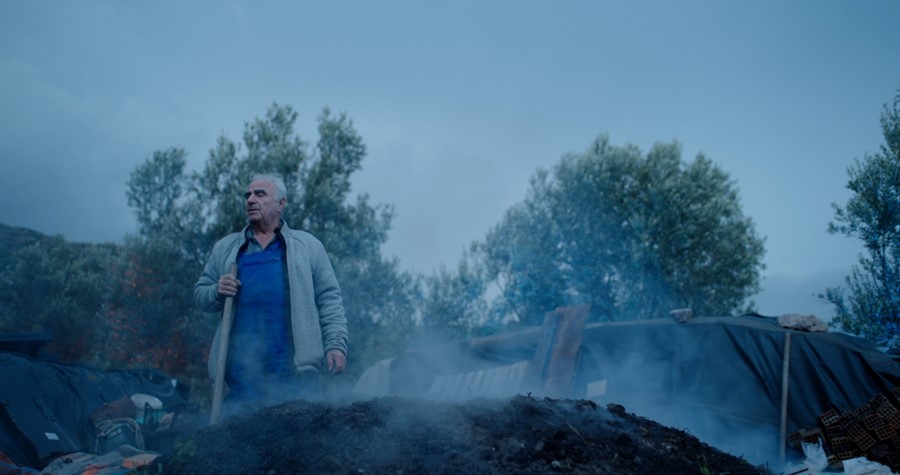
Wu Tsang, One emerging from a point of view, 2019. Courtesy the artist; Galerie Isabella Bortolozzi, Berlin; Cabinet & Antenna Space.
Somehow Tsang and her collaborators create a film that tackles these horrifyingly sad and complicated themes with a radiant poeticism that paradoxically makes the difficulties faced by these people all the more real. Segments with local farmers, who helped bring migrant boats to shore, sadly reflect that “there was nothing like it” in terms of trauma; how the hardest thing sometimes is to keep on living. These documentary threads are interspersed with otherwordly sequences of Yassmine Flowers, a transgender woman from Morroco, reading a story that her and Tsang wrote together in which she escapes a king and becomes “a deep sea techno witch”. Rather than focusing on her personal trauma, together they conjure a fantastical tale, spun in dreams and held together by hope in reinvention. In the finale, as Flowers swishes into view, the sea creatures winking in all their festive glitter, there is the sweet feeling that she found a place—in spite of the ‘stuckness’—afterall.
While One Emerging From A Point of View might seem—in terms of its magical realist storytelling—like a new departure for Tsang, who made her name with the 2012 documentary film Wildness about the community around an LA gay bar called Silver Platter in a predominately Latinx and Asian neighbourhood, the artist believes that her new film’s “core issues” are actually the same as they’ve always been. “I think the intersecting experiences of migrating, being transgender, struggling to have a place to feel safe, the necessity to create spaces out of a need to survive—these are the kind of thematic subjects that I will never tire of talking about because I encounter them all the time,” she says.
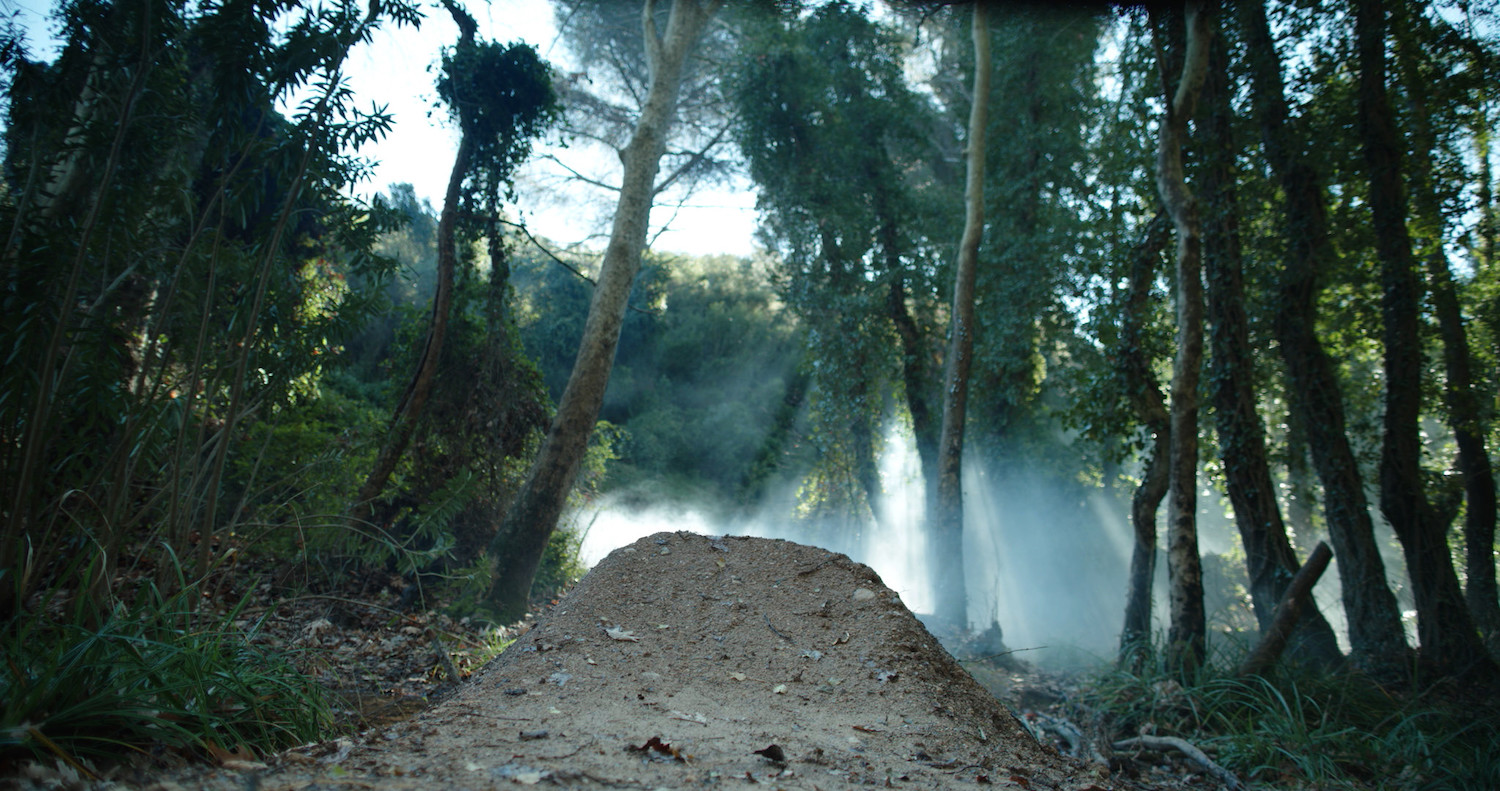
Wu Tsang, One emerging from a point of view, 2019. Courtesy the artist; Galerie Isabella Bortolozzi, Berlin; Cabinet & Antenna Space.
Arguably, these themes of survival and resistance reach their fullest poetic potential in the 2017 film We hold where study—a gorgeous, compelling two channel projection featuring boychild and Josh Johnson on one channel; the dancers Ligia Lewis and Jonathan Gonzales on the other. Here, the performers improvise and move as boldly and free as luminous electric currents, their dancing bodies telling stories, of pain, and hope, and sorrow, anger, fear, defiance and love. Here, dance becomes cinematic in its expansive ability to convey emotion and narratives.
There is No Non-Violent Way to Look at Somebody is the result of Tsang’s year long residency at the Gropius Bau. Significantly, she was inspired by the way light passes through the majestic building’s high windows. Light, Tsang tells me, has a special meaning for her. “It’s hard to put into words. It’s just a feeling,” she says with a smile. The awe-inspiring quality of light assumes metaphorical significance in Tsang’s hands—she “wanted to create a passage of light through the exhibition … it is choreographed in a way that it goes from light to dark.” In this way, it’s hard not to read the exhibition as about letting the light in, to paraphrase Tsang. And what that means: of being truly open (the museum’s director Stephanie Rosenthal continually refers to Tsang’s work in terms of its “radical openness”), of continuing in the face of adversity, and of finding hope and beauty even when it may seem impossible. “Of moving and being moved, of knowing that we are affected,” to quote the opening sequence of We hold where study.
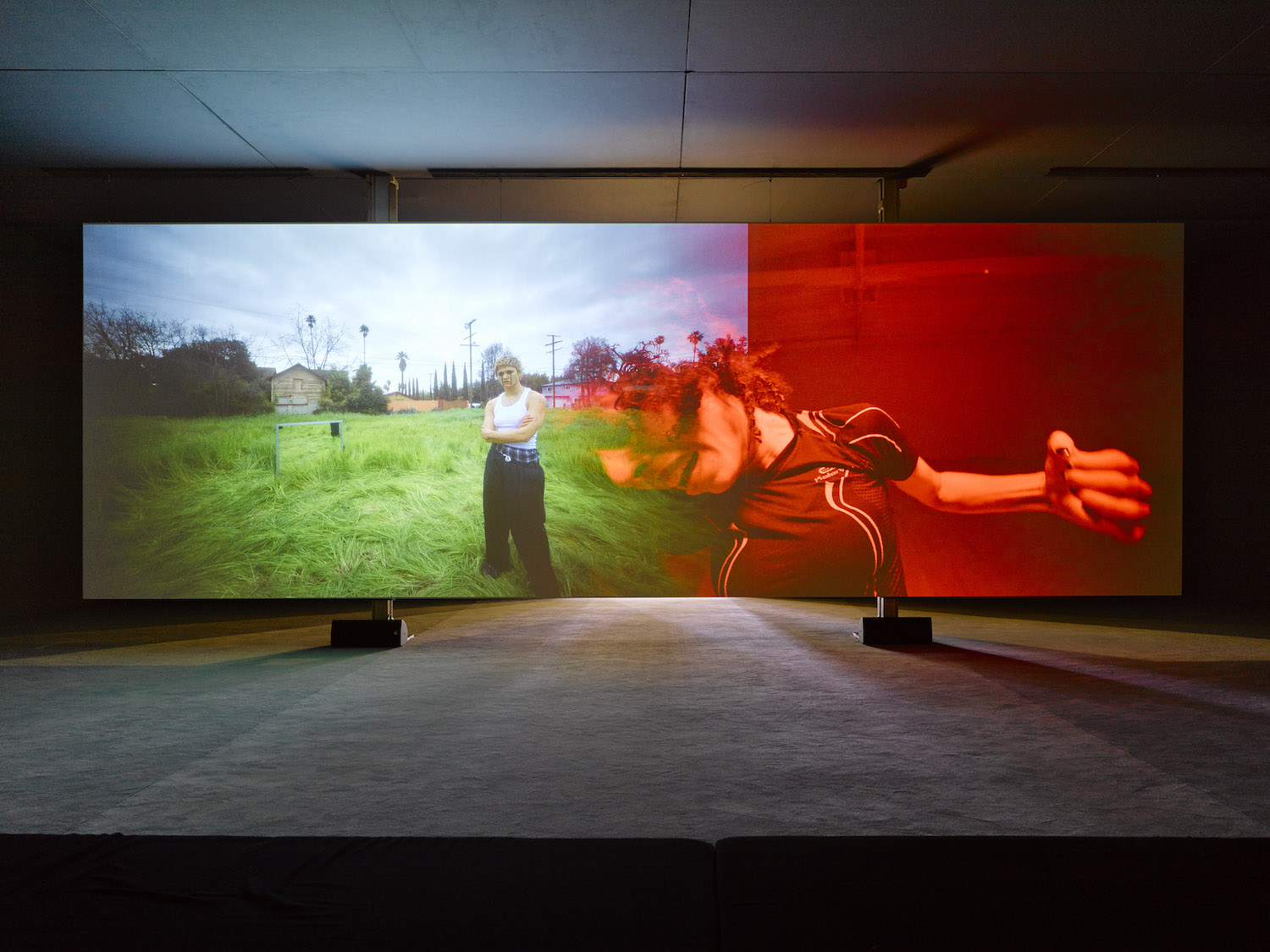
Wu Tsang, We hold where study, 2017. Photo: Roman Mensing. Courtesy the artist and Galerie Isabella Bortlozzi, Berlin.
Towards the end of One Emerging From A Point of View there’s a scene showing locals pulling at a long thick rope as though they are in a game of Tug O’ War (one can presume that what they are really doing is pulling a migrant boat to shore). As a scene it is memorable in terms of its foregrounding of human strength, of working together, of collaboration. If light and dance and magic and movement are touchstones of this exhibition, then collaboration is what brings it all together. As an artist, Tsang rejects the jaded concept of the singular “great artist”—”I like to think less about individual personhood and more about experiences of overlap or entanglement,” she says. “The art world tends to want people to be solo artists and as sources of personal genius, and I don’t believe that,” says Tsang. “I think it’s much more about the work we do together, and this work is just an excuse to do that.”
There is No Non-Violent Way to Look at Somebody runs through to 12 January 2020 at Gropius Bau, Berlin.