
This September, Berlin Atonal – the forward-thinking sonic and visual festival – returns to Kraftwerk Berlin for its 10th year since its relaunch back in 2013. Across ten days from 7-17 September – six concert nights and four exhibition days – the festival brings together an eclectic mix of activations spanning music performances, art installations and exhibitions. After speaking with co-curators Laurens von Oswald and Harry Glass, who shared further details about the concept for this year and what we can expect (you can read here), we met with three of the artists presenting at the festival’s exhibition Universal Metabolism as part of Berlin Art Week from 11-14 September. Meet Marco Fusinato, Bridget Polk and Billy Bultheel.
Marco Fusinato
Marco Fusinato is an artist whose practice traverses the mediums of performance, installation, photography and recording. While he often withholds his own interpretation of the images and objects he presents and re-presents, the material itself plainly indicates the artist’s interests in the potential overlap of cultural production and radical modes of activity.
SLEEK: Introduce us to your practice.
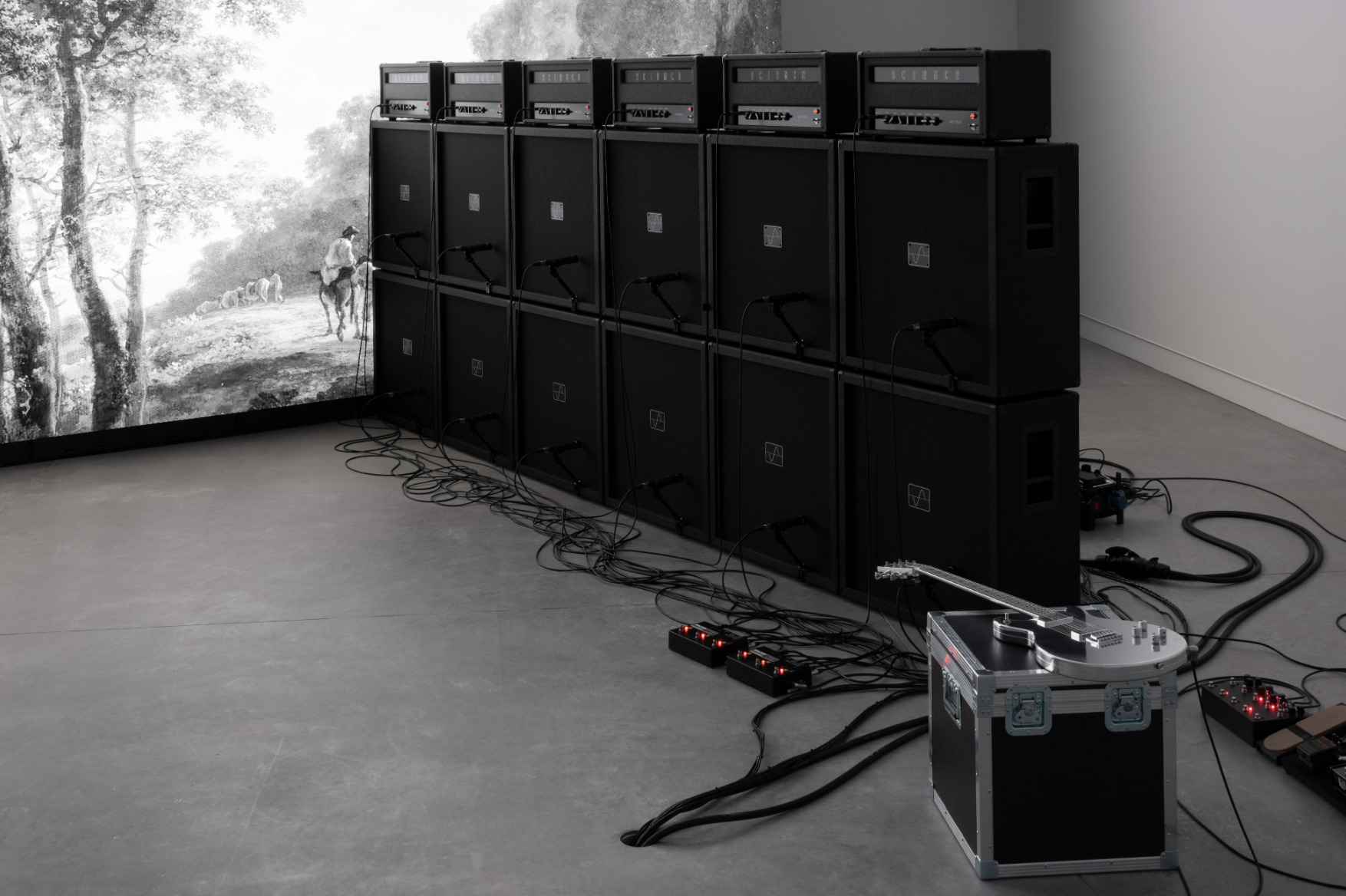
Marco Fusinato: Working across disciplines and cultural fields, I’m interested in exploring the tensions and contradictions of opposing forces, say from underground culture versus institutions, noise versus silence, purity versus contamination and so on. As a musician I explore the idea of noise as music, using the electric guitar and mass amplification to improvise intricate, wide-ranging and physically affecting frequencies.
S: Your work as an artist and musician has taken shape through performance, installation, photography and recording. How do these differing practices intersect, is there something that unites them?
MF: There’s a particular aesthetic with sound and images I’m attracted to… dissonance, volume, distortion, grain. The fact that I despised the popular music of my youth so much made me seek alternatives. This complete hatred continues to be a source of inspiration. When I hear piped popular music from that era in public spaces, I find it such an infringement. It’s a form of torture that’s infiltrated the western world. Everything about it makes me want to create the most unsympathetic music possible. The intersection is vital. Infrastructure is a weapon.
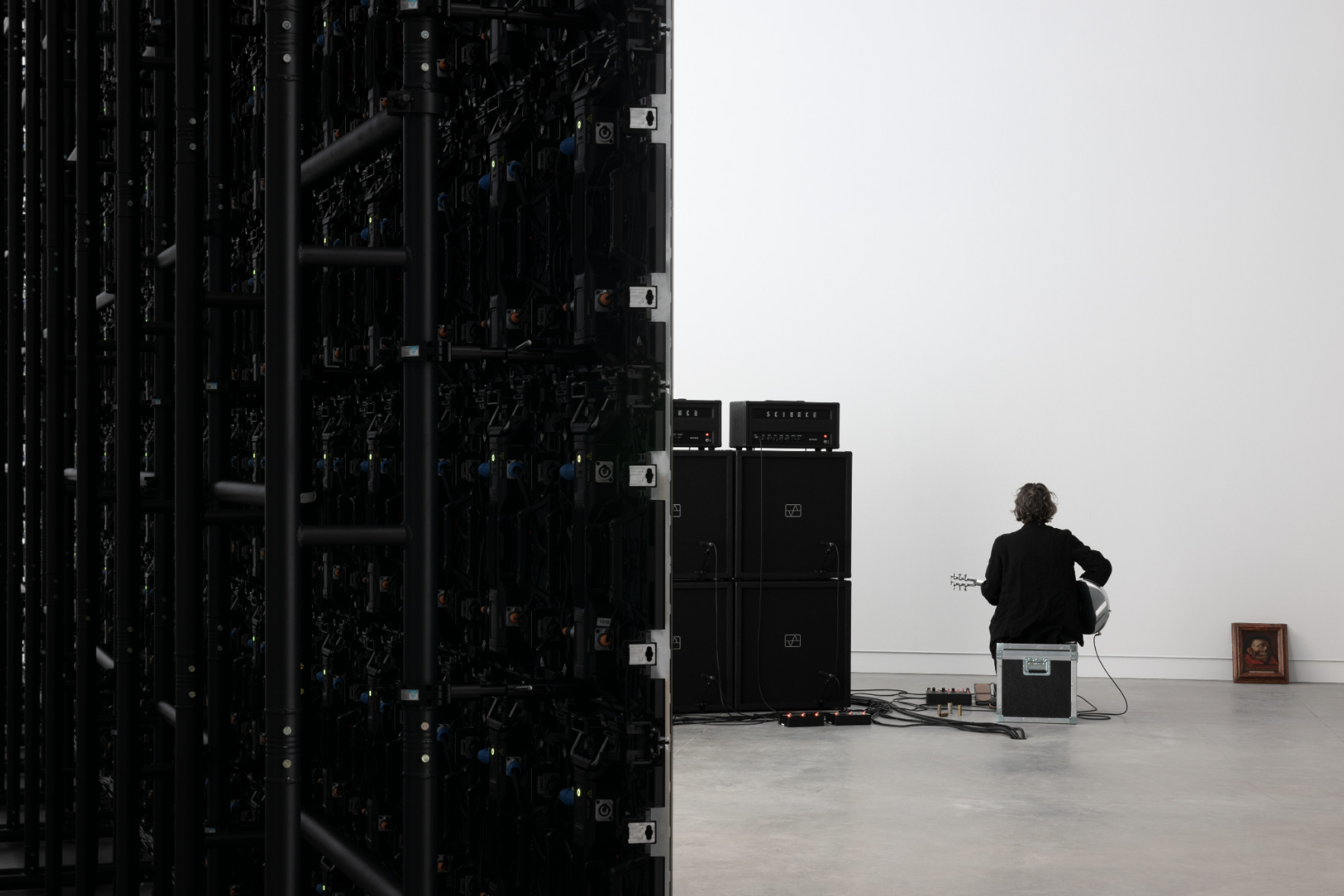
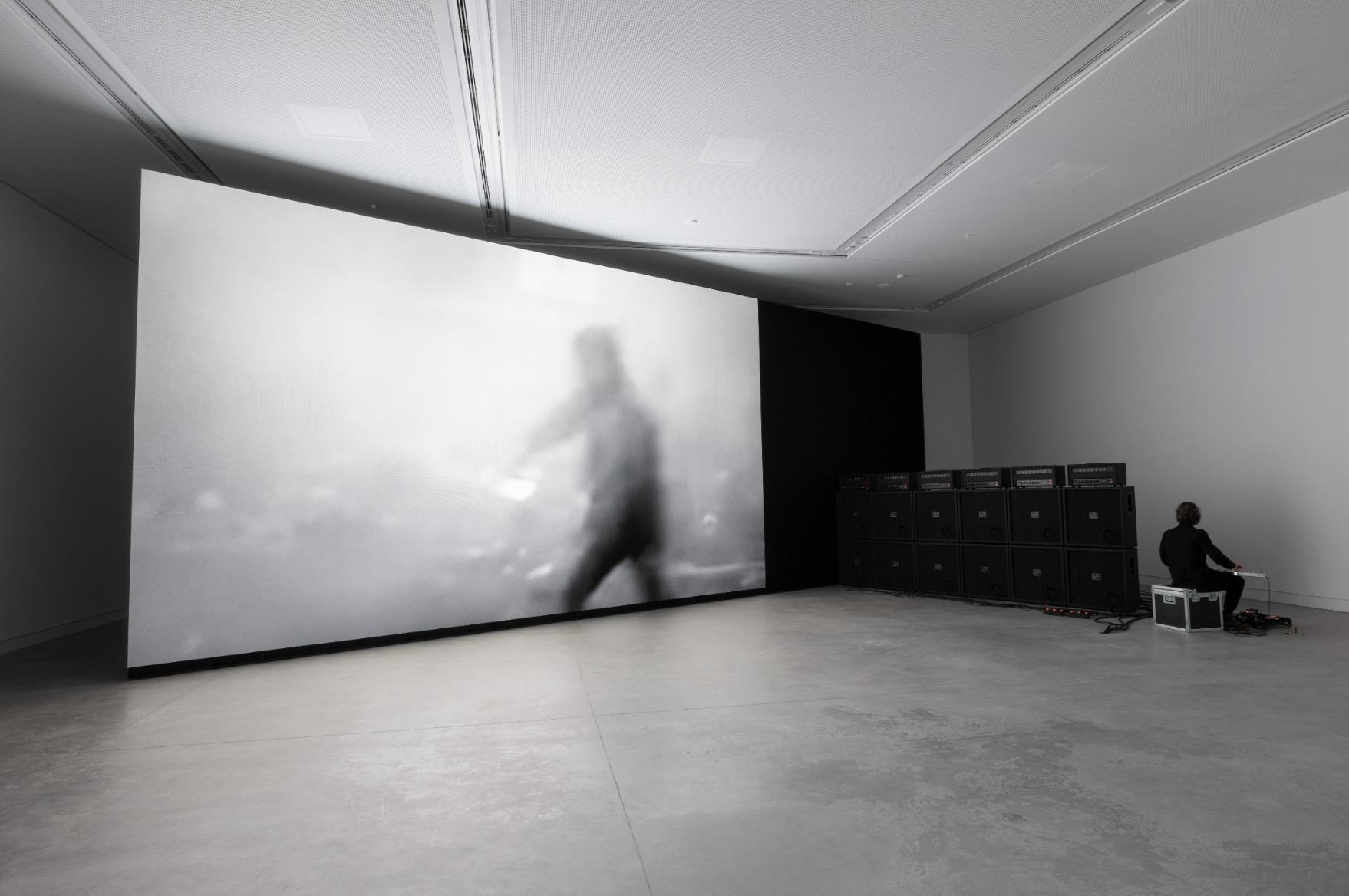
Images Courtesy of the Artist.
S: I read that you want your work to create an experience; one that makes people see, hear and most importantly feel with their entire bodies. How is feeling (potentially in opposition to emotion) important for you when it comes to making?
MF: My idea of activating the audience is to remind them that they are alive. That they have a pulse. My work always begins with something I want to experience. It may connect with someone down the line but it may not. There’s an expectation to make work that is ‘liked’, which I’ve always found to be ludicrous. I’m aware that my references are pretty oblique, marginal, unpopular. And I have no expectation that what I do will be ‘liked’ so I’m never disappointed.
S: Berlin Atonal seeks to challenge the exhibition format through a reconsideration of the model itself – for both viewer and artist. How does this element of experimentation elevate your practice?
MF: There’s something about scale – how to use it in relation to the human body to create an experience. Usually people in galleries are passive and they are often referred to as ‘the viewer’. I regard them as ‘the audience’ as they are active participants with all their senses involved in the exchange; the emotional and physical state they are in, their knowledge of the references, their frustration with the mode of transport used to get there, and so on. These are all factors that influence the way they will respond to the experience. The traditional exhibition format is something I’ve been frustrated with for a long time. Ultimately it is there to service a market. Experimentation is a risk therefore it’s where the most interesting and surprising things can happen.
Bridget Polk
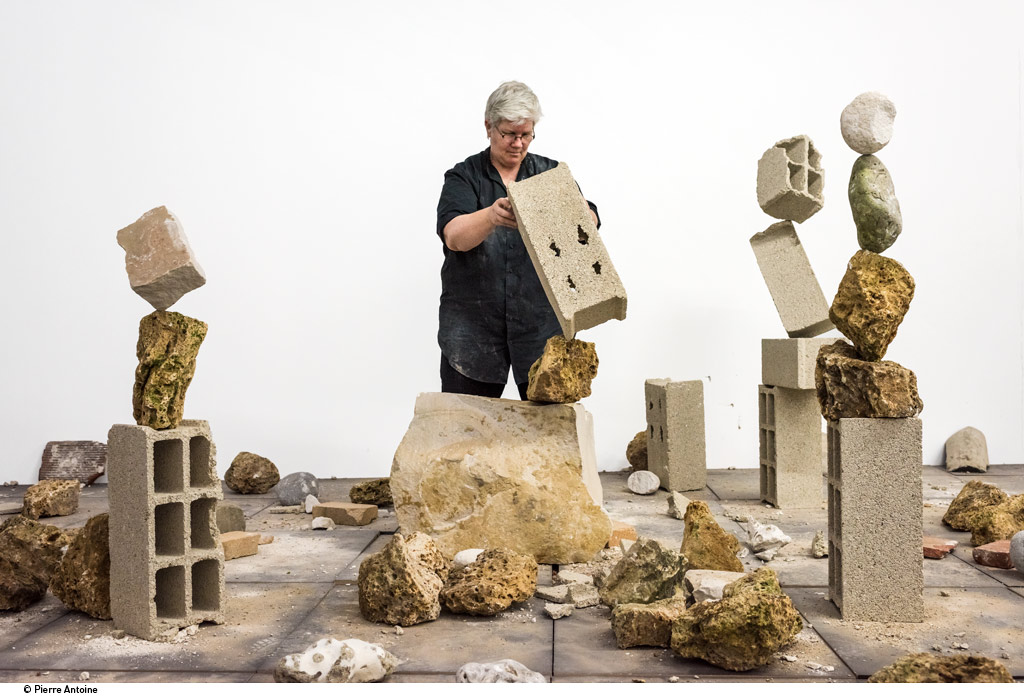
Artist Bridget Polk, born and based in Portland, makes balancing rock installations. These impossible sculptures are held in place thanks to a precarious equilibrium that defies the laws of gravity in order to “organise chaos,” according to the artist herself. As an architect of ephemeral and nomadic worlds using stones found here and there along her way, she uses meditation and time as means of approaching and transforming the world. Using man-made materials including cinder blocks, bricks, broken concrete walkways and statues as well as rocks and stone slabs shaped by the elements, Bridget Polk builds architectures where “natural” and “cultural” worlds meet.
S: Introduce us to your practice. How did it begin?
Bridget Polk: In 2009, I saw photos of the work of Bill Dan, who balances stones on the shores of the San Francisco Bay. It looked impossible and I needed to know how to do it. I googled “how to balance rocks” and found several videos explaining the surprisingly simple mechanics which, when combined with a little practice and patience, enable one to create these seemingly impossible structures.
When I started balancing, I had been meditating for many years and I enjoyed the way stillness, silence, and singular focus were the essence of both practices. I didn’t go looking for themes in my work because, for the first few years, it was more like a hobby. I had no idea that this “hobby” would lead to the opportunities it has. I became aware of the different layers of meaning and themes within my work as they revealed themselves. For example, I discovered the theme of non-attachment when I had to learn to let go of the frustration I felt when a piece I was working on fell, or the anger I felt when someone knocked one over intentionally. I found that acceptance of the ephemeral nature of what I do helps me remember that everything is temporary. The good stuff and the bad stuff. There’s no point in trying to control any of it. We are not in charge.
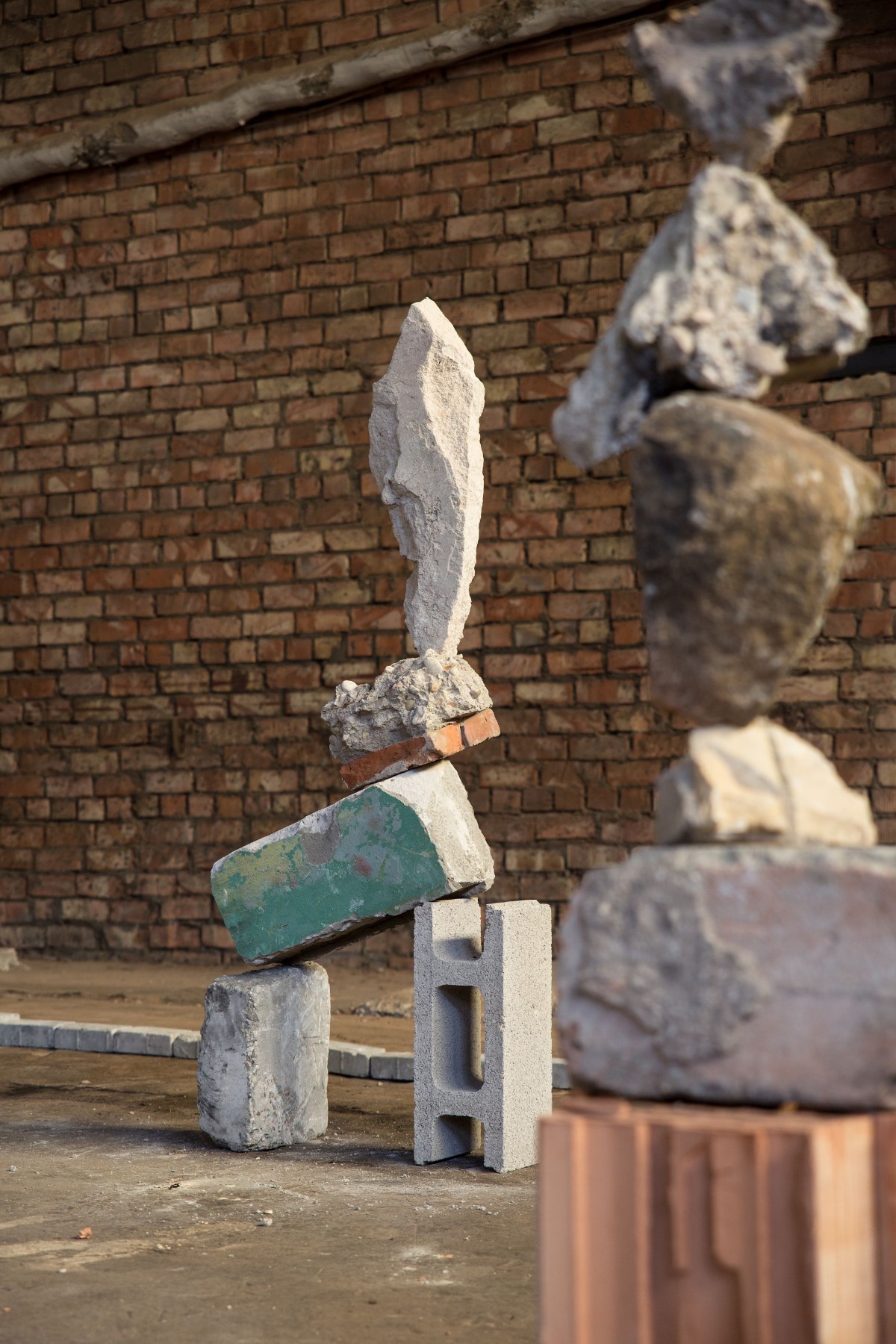

Images Courtesy of Daiga Rudzāte.
S: Your work is fascinating and intriguing, alluring and precarious. Utilising man-made materials combined with rocks and other materials found along the way, you build architectural worlds where “nature” and “culture” meet. Can you speak more about that blending of worlds?
BP: Sometimes I work with rocks only. Other times I use only man-made material. But when I combine the two, there’s an exponential growth of ways to find poetic and/or ironic elements in the work. Man grinds rocks to make blocks that become buildings. The buildings fall down and become chunks that resemble the rocks used to build the blocks… Then I take some of each and build structures where each element is totally dependent on the other. What has changed? Are all the elements essentially the same? How many millions of years old are the rocks? Who lived in the buildings that fell? How old are the concrete blocks that were purchased at the building supply store for me to use in some of my pieces? Are they new? Or are they made from recycled rubble? Rubble from an old building. A building made of old material. Material that was made of rocks that are millions of years old.
S: You also seek to “organise chaos” in a way that defies the laws of gravity. What chaos do you refer to here?
BP: “Organising chaos” was used to describe my work by someone early on and I’ve been credited with the idea ever since. It’s a good idea though. A chaotic pile of stones and construction debris becomes a meticulously organised structure. Or a chaotic mind becomes focused or organised when participating in or observing this process. It works!
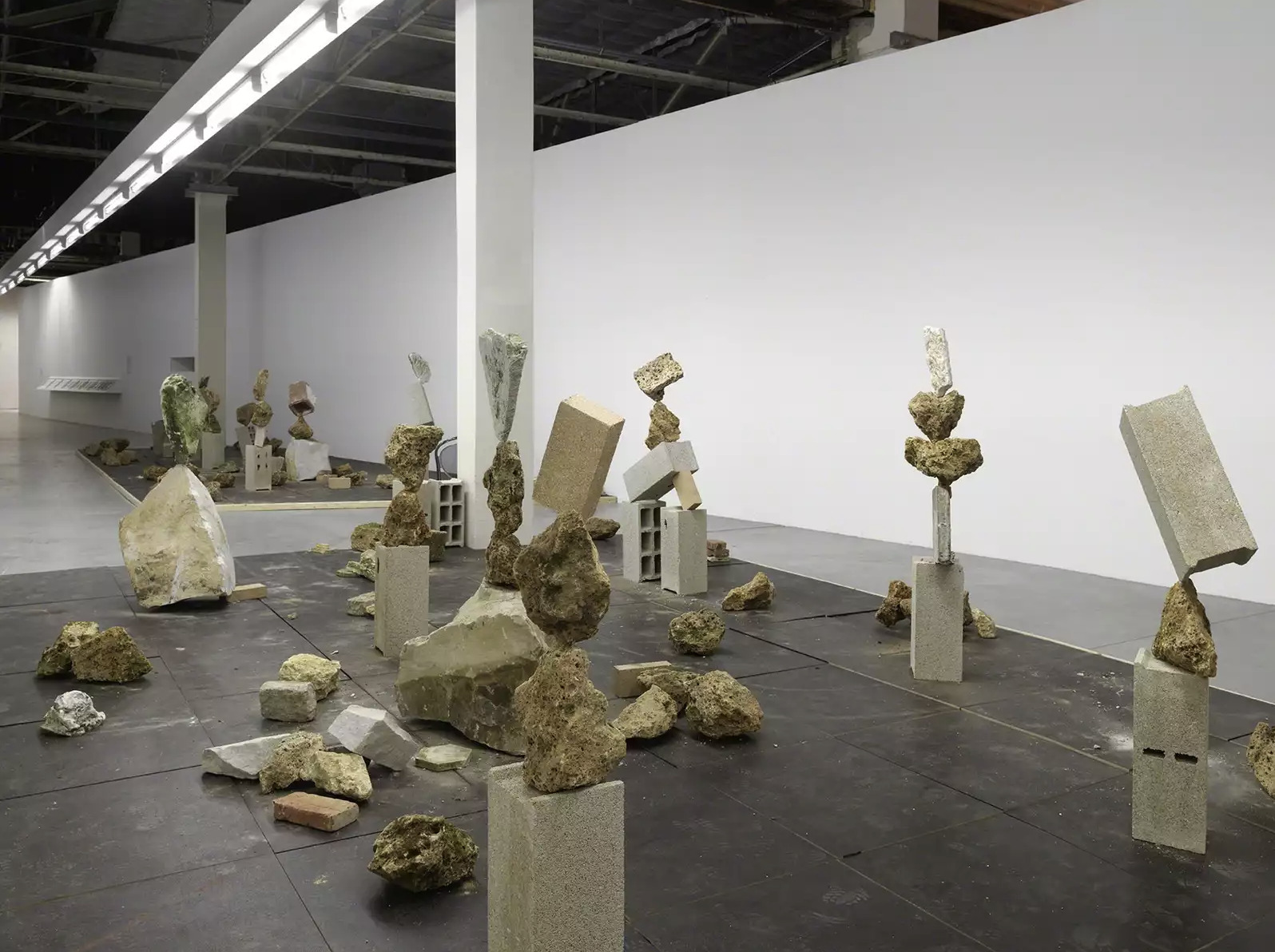
S: How do viewers interact/perceive your work?
BP: Over the years I have come to know many different interactions with and perceptions of my work. I delight in the sense of energetic interaction I feel when people are watching me work and come with me into a very quiet and focused state. Sometimes a person approaches a piece not quite knowing what they’re looking at, but as it dawns on them, I can watch stages of disbelief, wonder, curiosity and joy expressed in their body language and facial expressions. Some come to me in tears thanking me for some realisation they had while watching me work or spending some time looking at a piece. I tell them I appreciate their gratitude, but I’m not responsible for their experience, but the fact that they allowed themself to be still and quiet for several minutes is what created space for the realisation to come through. We’re all too busy.
S: Berlin Atonal seeks to challenge the exhibition format through a reconsideration of the model itself – for both viewer and artist. How does this element of experimentation elevate your practice?
BP: Being included in this extraordinary event where sound and structure will become family is going to test the levels of mastery I have reached in the themes I mentioned earlier. I realise the soundwaves may or may not topple some or all of my pieces from day to day. Can I remain unattached to the outcome and remember that the easier they fall, the more fabulously delicate they are? Will I remember that I’m there to build pieces, so who cares if they fall? Will I remember my own words about embracing the ephemeral nature of my work?
All this will be part of my experience. It’s different every time. This time will be very different. I intend to rise to the occasion. I’ve learned to trust that if I do what I know how to do and people come, there will be many levels of understanding for all of us. There will be many depths of experience for all of us. We will all try to define it. It won’t be possible, but we’ll try. What an adventure!
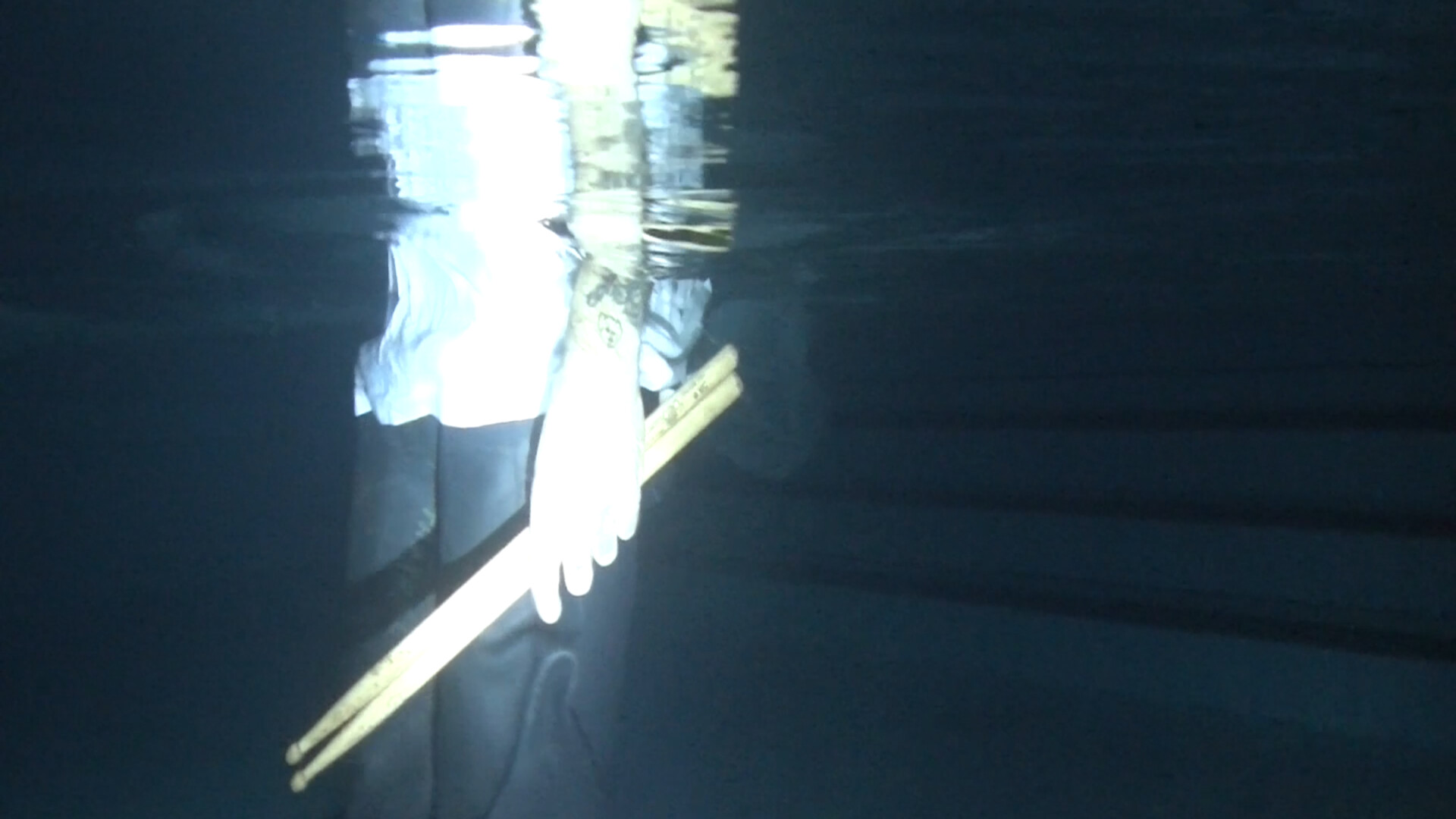
“Unter” by Billy Bultheel & Tanya V. Abelson, DISAPPEARING BERLIN x Radialsystem, 2022, Photo: Thyago Sainte. Image Courtesy of Schinkel Pavillon.
Billy Bultheel
Billy Bultheel is a composer whose work lies at the intersection of performance art and music. He composes for site-specific projects that bring together sculpture, installation, performance art and live and synthesised music. His music is rooted in the electronic tradition, but deeply inspired by renaissance music, early baroque and medieval polyphony. His compositions are dark and melancholic and translate through noise, ambient metal and experimental orchestration.
S: You compose for site-specific projects that take shape through sculpture, installation and performance art. When it comes to the composing sound, does the process differ depending on the format of the project itself?
Billy Bultheel: Each project is embedded within a space, or some kind of spatial thinking. The process of composing sounds, whether electronic or instrumental, are dependent on the resonance and architectural characteristics of the space the music is for. Choosing instrumentation often depends on the movement the instrument allows the musicians, and so performance and choreography become an important part of the composition.
S: Naturally, your work is very collaborative. Why is collaboration important – both in terms of your practice and the wider art industry?
BB: After studying music I got really obsessed with dance and started working with collectives and performance groups. One thing that attracted me in performance was that the work happened through working with people, and not just through me sitting alone behind my computer, ‘composing’. The way I work with musicians now is very similar to how choreographers work with dancers. I meet them in a rehearsal space and through improvisation and collaboration start to choreograph music. I write very basic musical scores that function as anchor points for the musicians, but most of the music happens through following live improvisation and movement scores.
I also collaborate with artists directly. I’m currently working with the artist James Richards on a performance for video and live music. I’ve worked with the instrument builder and artist Tanya V. Abelson, and I’ve had a long history with performance artist Anne Imhof, composing, choreographing and performing in her works between 2015 till 2019. All these collaborations were based on exchanges of interest and a sort of clashing of practices. Successful collaborations are when you feel like you’re going beyond your regular practice, and really dive into the deep end with the support of someone you trust. I think collaborations of this kind allow us to take risks and really push the art into uncharted territories.
I’m very lucky to be collaborating on The Thief’s Journal with curator Marie-Therese Bruglacher, scenographer Andrea Belosi, and nine extraordinary musicians.
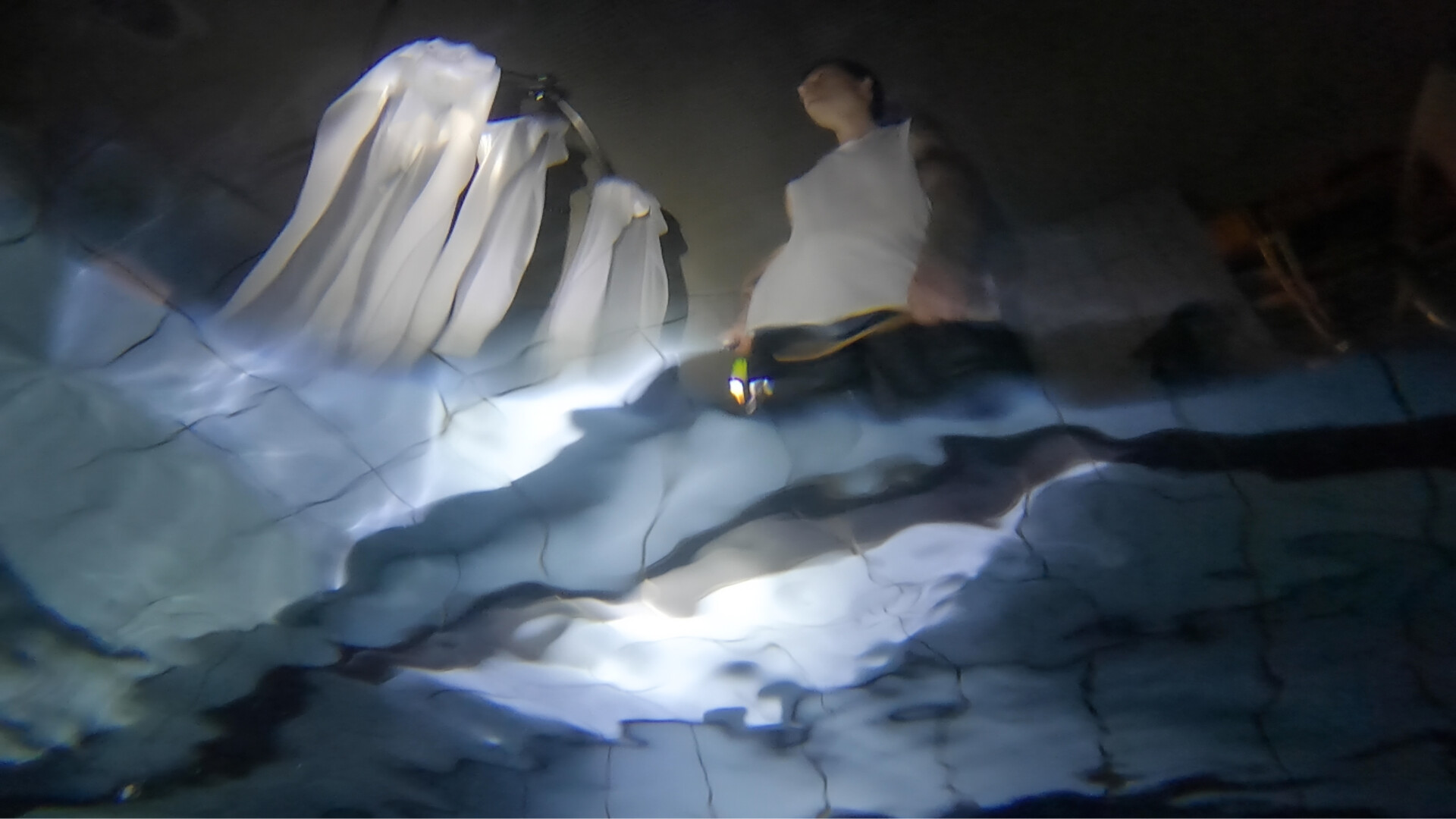
“Unter” by Billy Bultheel & Tanya V. Abelson, DISAPPEARING BERLIN x Radialsystem, 2022, Photo: Thyago Sainte. Image Courtesy of Schinkel Pavillon.
S: I read that your compositions are centred around “deconstructing the architecture of the concert hall and embedding music in unexpected locations”. How does Berlin Atonal lend itself to this approach?
BB: Kraftwerk is an amazing space which allows for so many options. It’s also a space where many musicians and composers have come with their alternative programs and projects. So I definitely felt that some kind of directed approach was necessary. I’ve been researching the psychoacoustics of renaissance architecture and have developed with Andrea and Marie-Therese a sort of side chapel to Kraftwerk’s cathedral-like main hull. I’m really excited that I could build my own little church-like acoustic chamber within this gigantic mastodon.
S: Berlin Atonal seeks to challenge the exhibition format through a reconsideration of the model itself – for both viewer and artist. How does this element of experimentation elevate your practice?
BB: It goes hand in hand really. I think my practice always challenges exhibition formats, so Atonal is a good place for it.