Sarah Friend on Prompt Baby, Consent, and Ownership.
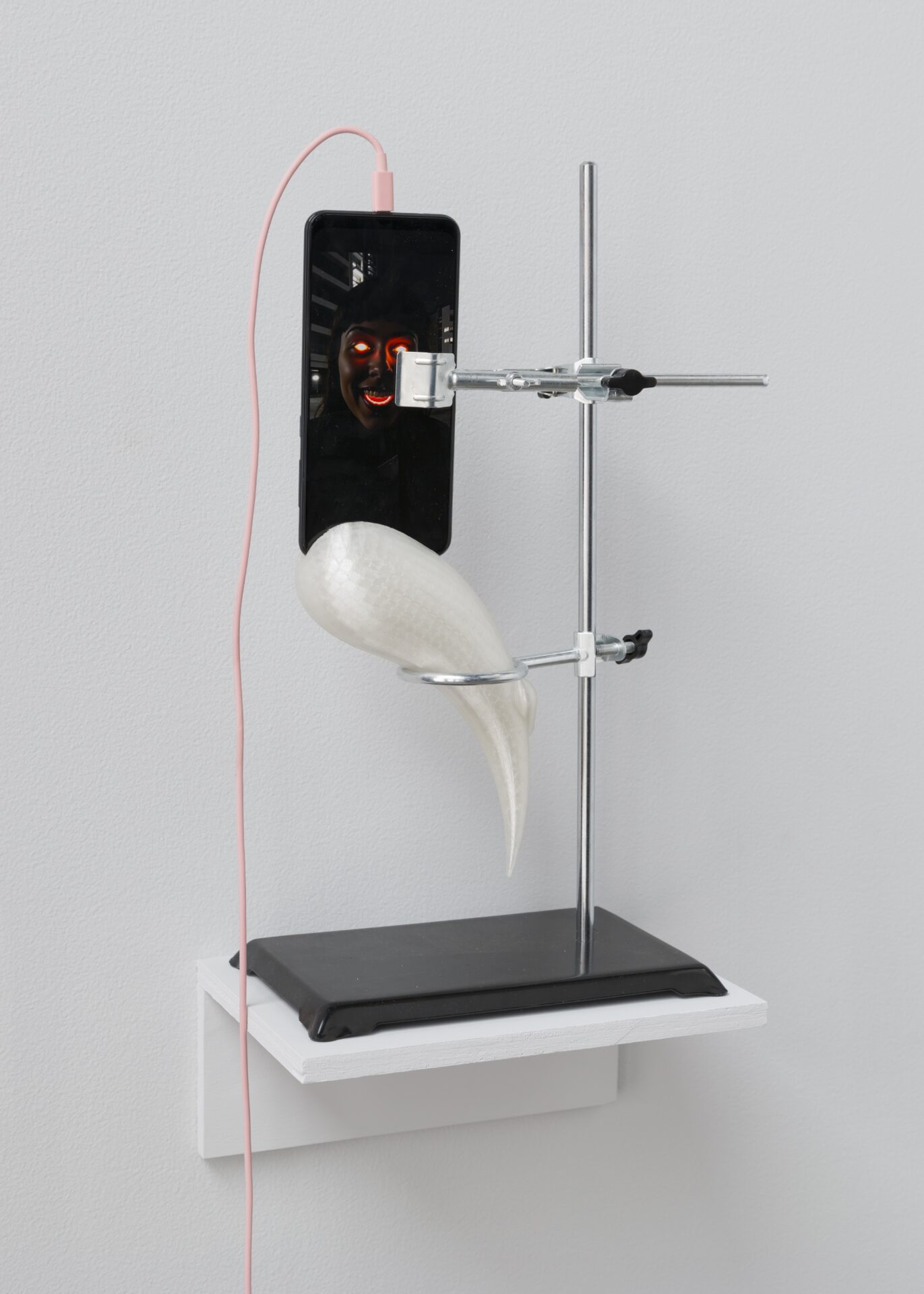
What happens when anyone can generate an image of your body without your consent? As generative AI makes synthetic images increasingly easy to produce, the question is no longer hypothetical. Artist and software engineer Sarah Friend approached the problem by reversing the usual power dynamic. For Prompt Baby, she created an AI version of herself that collectors could prompt, but she retained control over which images would actually be made.
What led Friend to Prompt Baby was not initially AI, but economics. Having spent years working with blockchain and cryptoeconomic systems, she had become interested in the tension between the value of an artwork and its existence as a financial asset. She began to see a similar tension around the body, which led her to research OnlyFans creators and the relationships between intimacy, money, and online images. It also connected back to a question that has run through her practice for years: What happens when the rules governing a system become part of the artwork itself?
In conversation with Anika Meier for SLEEK, Sarah Friend discusses what she learned from OnlyFans creators about consent, money, and emotionally entangled relationships, why Prompt Baby alienated part of her existing audience, and why she sees protocols themselves as an artistic medium. She traces that thinking from day trading and NFTs to 1970s performance art and her latest sculptures made from data-center cables. Despite her concerns about AI and its growing military entanglements, she remains committed to imagining better technological systems.
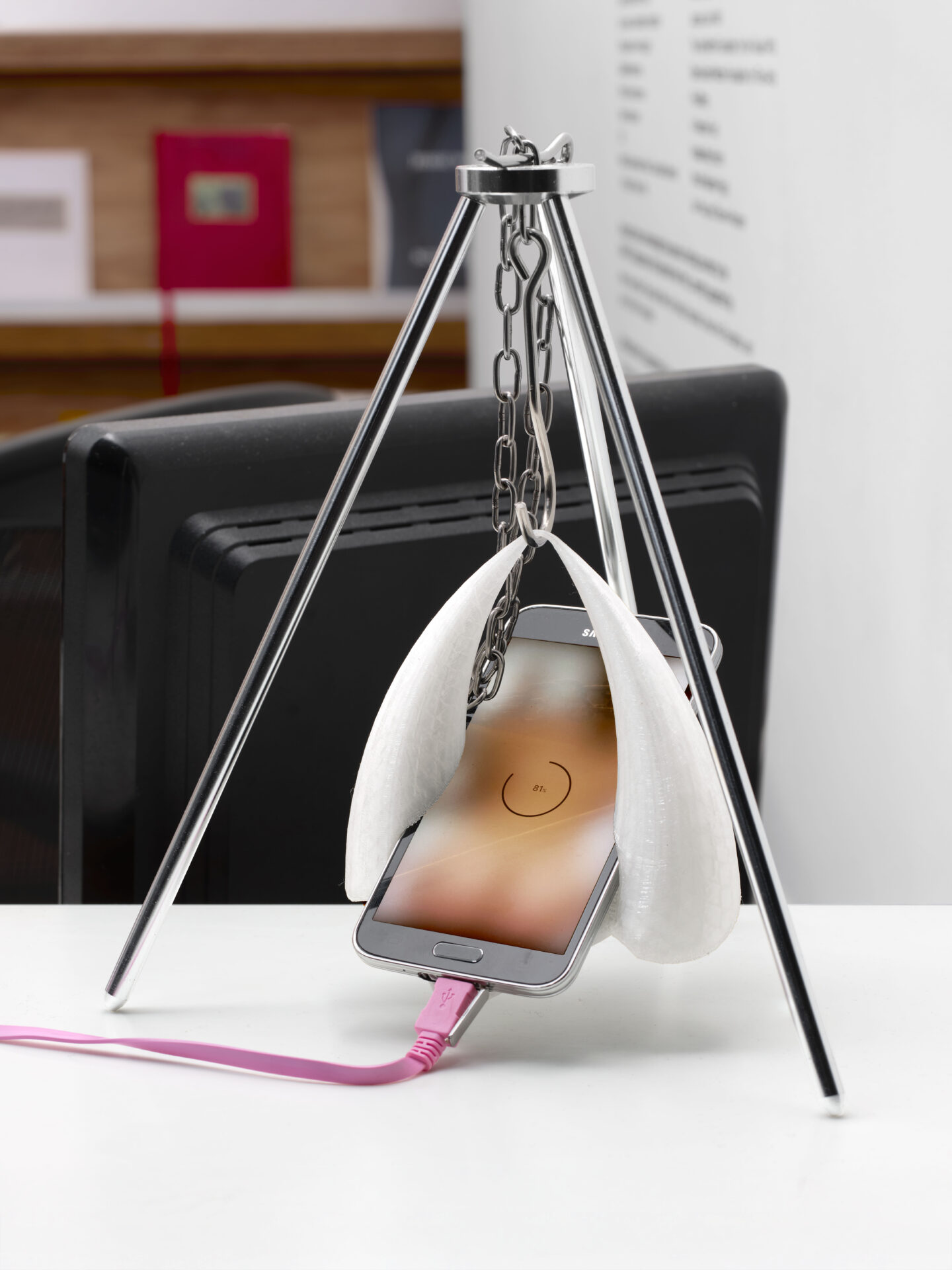
ANIKA MEIER Sarah, how did you get from thinking about the economic value of digital art to thinking about the economic value of the body?
SARAH FRIEND I started thinking about when and how an artwork interacts with its status as a financial asset. There’s this tension between feeling like the artwork has a value that could never enter a market and, simultaneously, very real market speculation happening all the time. I wondered where else that tension exists, and one of the areas that seemed to have a really similar dynamic was sex. So I went on a whole research bender exploring that industry. I met with people who run OnlyFans accounts and learned more about it. And the more I learned, the more I felt like there was indeed a similar tension. Is there a value to a body that can’t be priced? On some level, yes. But of course, we do pay to consume both images of bodies and literal bodies (through sex work) all the time in our culture.
So it was actually exploring this seed, rooted in economics, that got me to start thinking about images of women’s bodies online and the marketplaces they circulate in. Of course, there were other things happening with AI at the time as well that all fed into the work. But it actually started with an economic observation.
AM What did you learn from the OnlyFans creators in relation to selling your own work as NFTs?
SF I was interested in the emotional entanglements we have with collectors and patrons. There’s a feeling, maybe, that when we’re being paid for our time or for our artwork, our engagement is less sincere. If a collector wants to come to my studio and meet me for coffee, am I able, structurally, as an artist, to say no? The answer is maybe I’m not, right? But that doesn’t necessarily mean that the conversations I have with them are insincere or aren’t rooted in something like real friendship. Both of those things can be true simultaneously.
So I talked with people who run OnlyFans accounts about the kinds of relationships they have with their clients, which are similarly economically entangled and not really free, but perhaps not insincere either. It was extremely interesting to find that we did have common experiences, a common feeling about how these relationships work. The other thing I thought was really interesting was asking people about their relationship to AI. I wasn’t sure what to expect. I thought I might hear hostile answers, but mostly I didn’t. What I mostly heard was, “Oh, can it make my job easier?” The real concern was not that AI images of you might exist. It was that those AI images should not depict you doing things that you wouldn’t make actual images of yourself doing. One performer might have a boundary, maybe they don’t do feet or whatever, so they would want the AI images to respect that boundary. It was about consent and boundaries. They were in favor of the images existing, especially if the economic conditions around those images were not exploitative of them. So, for example, it’s not a random guy who scraped your photos and made nudes of you. It’s a system where the performer receives royalties or revenue from the circulation of their own image. Both of those things that I heard from OnlyFans creators informed Prompt Baby quite a bit.
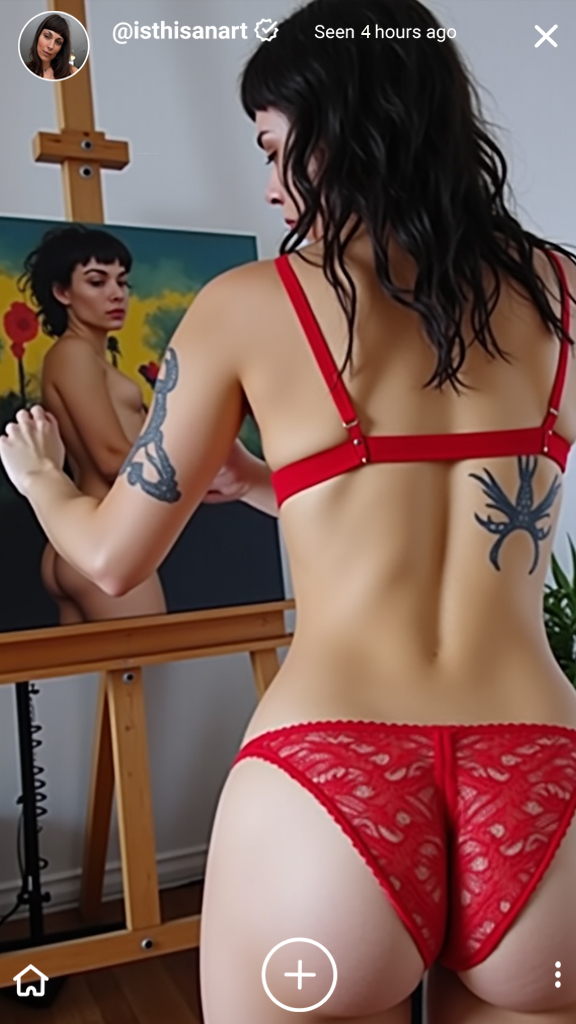
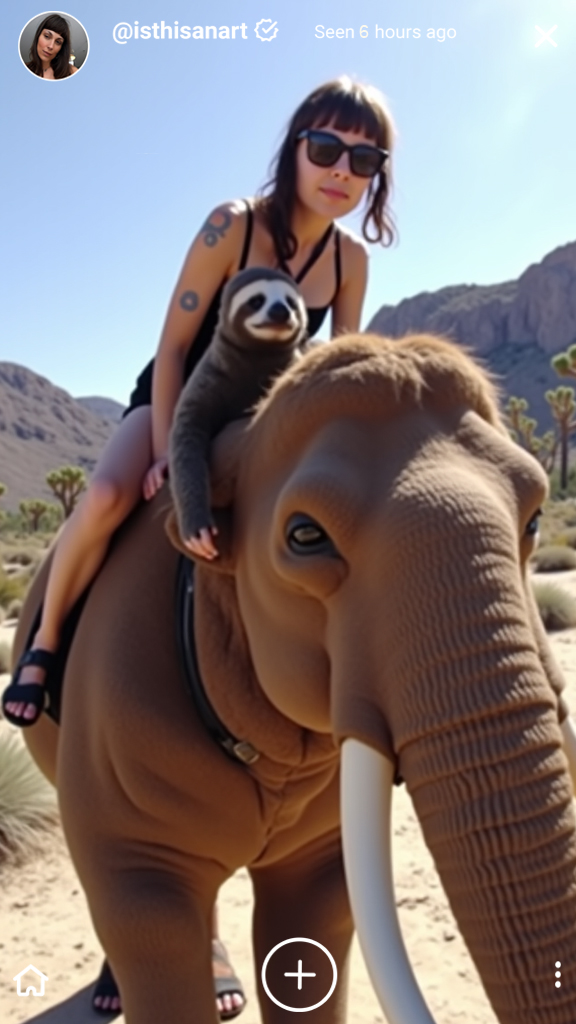
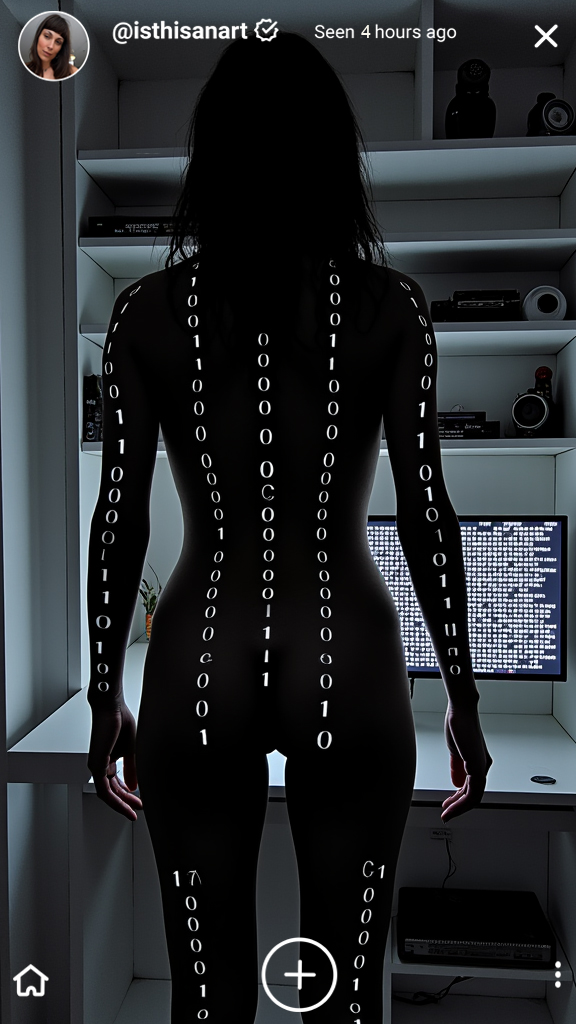
AM Prompt Baby felt unexpected to me at first. You created an AI avatar of yourself and gave collectors the opportunity to request images of it through prompts, while you retained control over whether and how those prompts were realized. Aesthetically and conceptually, it immediately made me think of 2010s post-internet art and cyberfeminism. But at the same time, it fits perfectly with the themes you just described, from the relationship between the body and technology to your interest in entangling yourself with the collector. How did you arrive at the work?
SF It took years for the world around me to digest that I had done that and figure out how to place it, I think, within the map of my practice. It was absolutely a pivot in my work, and it was very scary to do. People expect you to keep making the same type of thing that you’ve made. And this was not only different. There are ways in which it was very, very similar to some of the things I’ve made because, of course, it is a crypto-economic system, a protocol in a sense. But I do feel that, through shipping that work, an audience for what I do was lost. There are some people who knew my work beforehand and didn’t know what to do with Prompt Baby. They were a little uncomfortable with it, maybe, which is fair enough. They’re like, “Oh, this is uncomfortable or risky or sexual, or something that I just don’t really know what to do with as a curator or collector. It’s not what I’m about.” But then, simultaneously, a new audience was brought to my work through that piece. So I was scared to do it because I felt like that would happen. And it did.
AM And what prompted you to do it?
SF I got there through economics. I was very interested in the economic conditions that artwork circulates under. I was a participant in this sort of crisis around NFTs, which was quite some time ago, but I’m sure you remember it.
AM I remember that time in 2021 and 2022 vividly. Aren’t we still in that crisis?
SF I think it’s different. It’s been years since anyone’s piled into my DMs about how I’m a bad person for making an NFT. People are over it. People were mad about NFTs, nominally because of energy concerns. And so I had people retweeting the launch of Lifeforms, suggesting that I’d done something horrible by making a digital pet on a proof-of-work chain. It was like, “Destroy real animals while caring for your digital ones.” But obviously, Lifeforms was never even on a proof-of-work chain.
So I learned some things about how online content circulates. People will repost before they know what you’ve actually done. They’re not going to click through and read the actual text about the artwork. Anyway, this was all happening, and I started to feel like a portion of it was actually about these people’s perception, not about climate at all, but about enclosure. The feeling was that digital art had been circulating freely, and we were introducing a market somewhere there had never been a market before.
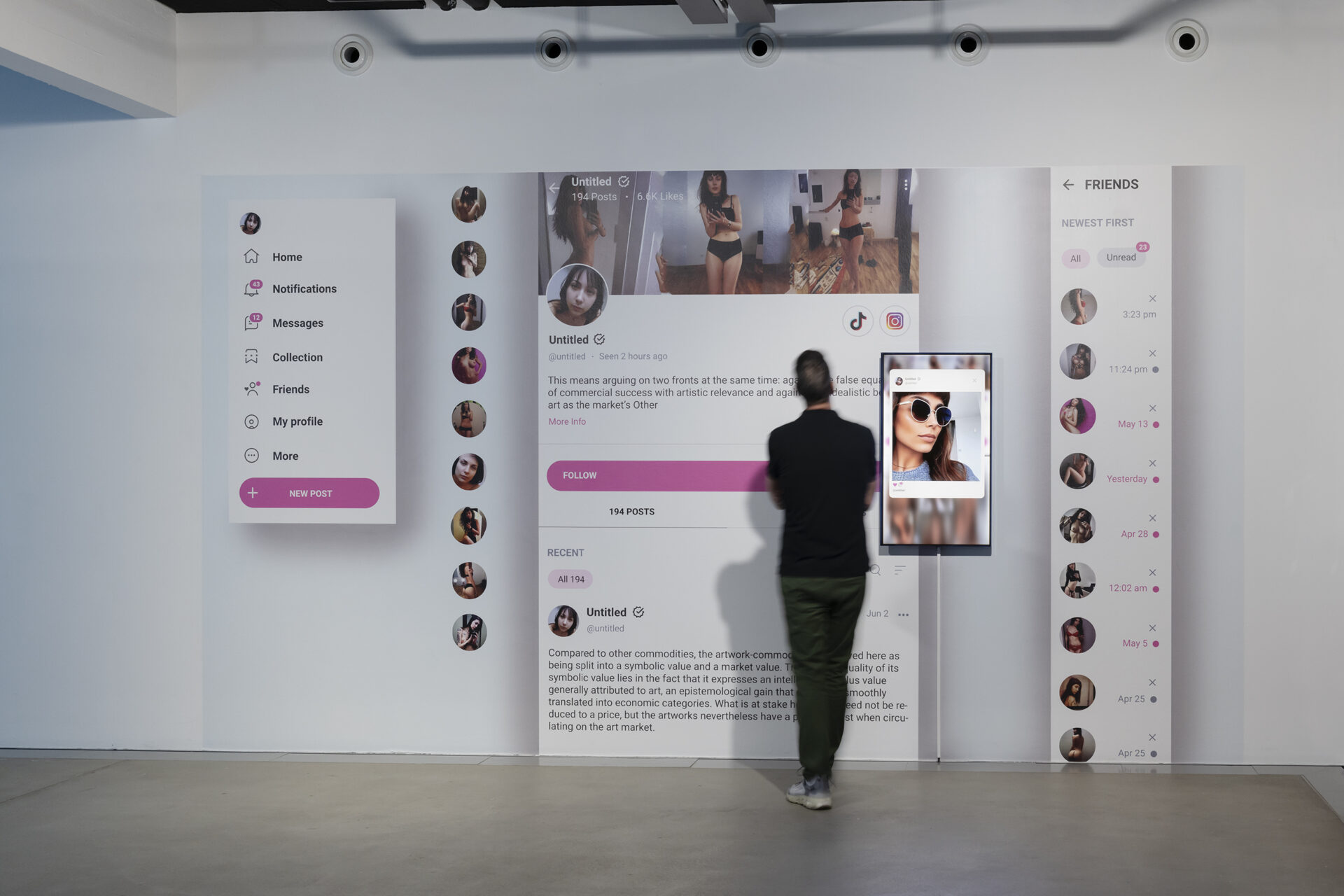
AM When it comes to AI and images of women, the conversation is usually about deepfakes. A stranger creates images of you, they circulate on the internet, and you can’t do anything about it. Prompt Baby basically reversed that dynamic. Collectors initially bought a loading screen image, and then they had to prompt you. You had to agree to the image being made. But you said that no one actually asked for anything you wouldn’t have agreed to.
SF I either accepted everyone’s prompt or offered them images similar to what I thought they were asking for, in every case except one. I was asked to make an image celebrating the election of Donald Trump. I wrote to him and was like, “I don’t really want to make this. Do you want to send me something else?” And then he did. It was a non-issue. He sent me something completely unrelated for his second attempt, so I made his second image. It was an extremely interesting interaction for me.
AM And how do you feel about these images being out in the world?
SF They make people who know me personally very uncomfortable, on the whole. A bunch of my personal friends are like, “It’s too creepy.” I’m completely used to them at this point. I sometimes think about how there may be a secondary processing of them that removes their context. Right now, most people who encounter the Prompt Baby images know that it’s an artwork. They know that I was proposing this system for interacting with collectors, mostly men, online. They have the context. They know what it is, they know the images are AI, and they know how they came to exist.
But I imagine a secondary process where some future AI system has scraped the internet and collected everything that comes up with the term “Sarah Friend,” and it might lose some of this context. So I’m like, is there a sense in which the boundary around me online has become fuzzy enough that, in a future reading, the Prompt Baby me blurs with the real me, I was tattooed with crypto logos? I’m at peace with it. It’s been several years since the piece started now.
AM Speaking of historical context, I’m interested in whether you see Prompt Baby in relation to cyberfeminism. I know that some artists are hesitant to describe their own work as feminist, even when they identify as feminists themselves. Some women artists say, “I’m a feminist, but my art is not feminist.” Do you feel similarly, or is cyberfeminism a context you actively think about in relation to your work?
SF I’m a feminist, but I don’t know if I can label my work that way all the time. I’d rather let that be decided by others. I’m certainly not opposed to it, though. If people are exploring cyberfeminism and they see this project fitting with what they’re exploring, I completely understand why it comes up in these contexts. The conversation around feminism that I think is most relevant to Prompt Baby, and more interesting to me, is about women taking agency over how it’s possible for this technology to work. I don’t love the conversation about publishing my own image being empowering because I don’t personally find it that way. That’s not what I was going for with the project. But sometimes people see that in the project, and who am I to tell people what to see in my work?
AM How can this technology support women artists thinking about these topics? You seem to be one of the few female artists exploring AI in conjunction with blockchain technology and protocols. Why do you think that is?
SF I do think I have a very unusual background, maybe. Some of the people who I think explore this the most are Mat Dryhurst and Holly Herndon, though they haven’t done it specifically with women’s bodies. They’ve proposed systems for how content like an AI-generated voice, for example, can circulate or be owned. I have a lot of experience as a creator and implementer of crypto-economic systems. So that informs the way I think about these images, maybe more than it would for other artists who didn’t have a whole career doing alternative finance before coming to AI. That background informs everything I do, actually. Even when it doesn’t necessarily look like it, there’s a kind of systems thinking or protocol development as a methodology.
AM You’re basically able to understand the underlying technology and think through your work from there.
SF Yeah, and to understand it in a specific way, too. Cryptoeconomic thinking, or protocol thinking, is a little bit like being a game designer. You’re like, “Oh, what are my items? What are my skills? What does the system allow me to do? What is this rule set, actually?” Thinking about the rule set as an art form is a specific artistic tactic that other artists absolutely use, too. But I think it’s maybe less common for it to occur alongside an interest in making work about the female body, though it does happen. I see a lot of precedent for this in 1970s performance art, actually.
AM For example?
SF The one people probably mention to me the most is Marina Abramović’s Rhythm 0. But also Valie Export’s work. There’s a sense in which these performances were scripts, scores for an event. A score is kind of an algorithmic protocol, in a sense. I don’t know that there were economics built into these works, but there was an algorithmic design of a situation, let’s say.
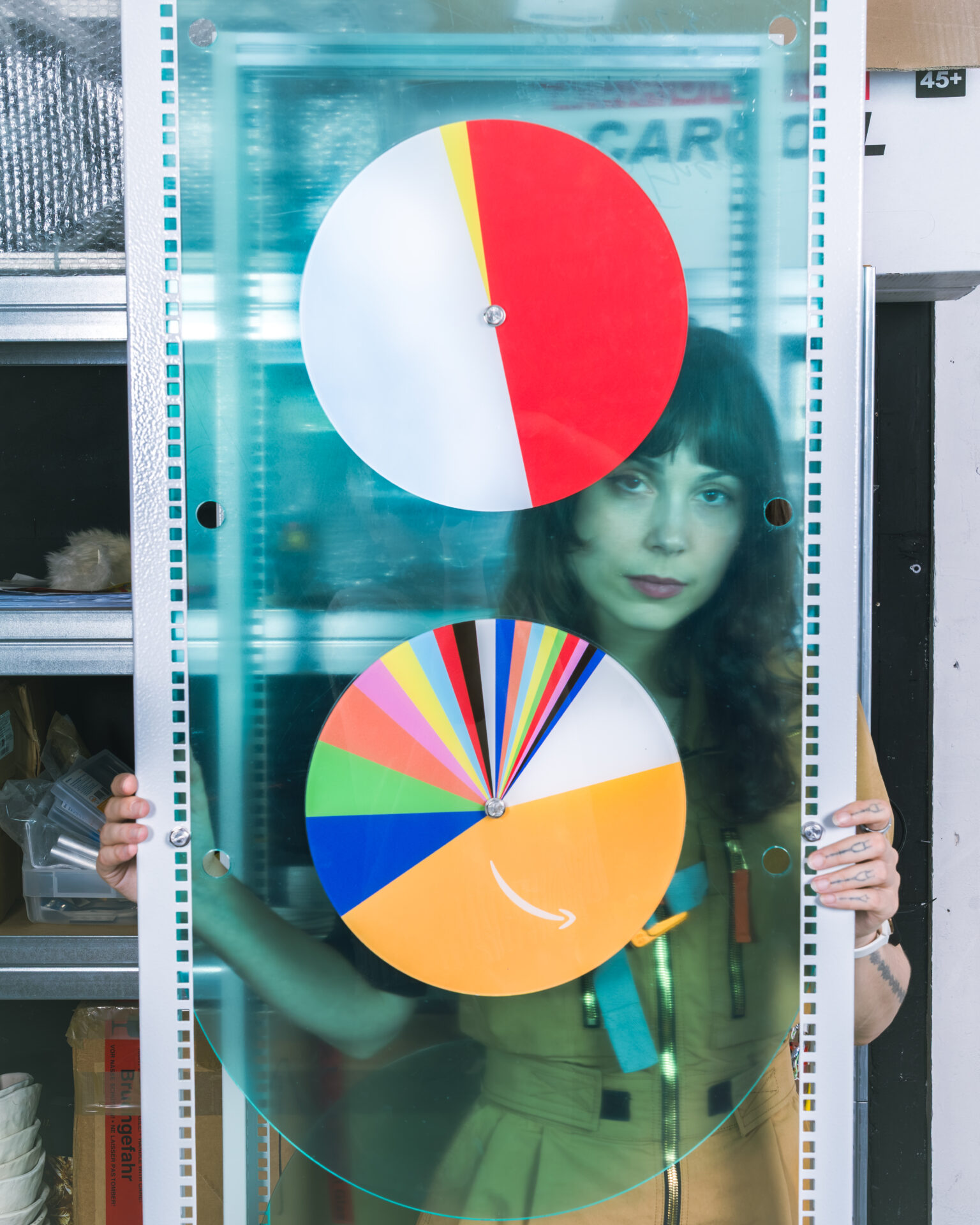
AM If I remember correctly, you’ve also said that artists need to understand the systems they’re working with. If you’re dealing with NFTs, for example, what does it mean to trade or collect? What does it mean to want to flip something? You were a daytrader yourself for a while. What did you learn from that, and why did you stop?
SF Well, I stopped because I didn’t really think it was a good financial decision at the end of the day. But I think it’s very useful for someone who might want to design a cryptoeconomic system to understand what it feels like to lose control of yourself in an auction. I don’t want to operate from a position of false moral superiority just because I’ve never tried it. When I was daytrading, it was well before any of this, before NFTs existed. It was around 2015. In hindsight, I think of some of that stuff as artistic research. I didn’t think about it that way when I was day trading, but it’s artistic research in the sense that we know things differently when we’ve actually done them.
That’s part of why I wanted to make Prompt Baby as well. I didn’t want to write a text about what AI images mean for the self without having felt what it’s like to make an AI image at the prompt of someone else and to feel the various things that I felt about those images. It’s not easy to summarize what I learned from doing that, but I think I did learn something real about what it’s like. I was subject to the technology. And through doing that, I learned something that can only be accessed through embodiment.
I have another example of this, which is very funny. I made an Instagram Reel for The Blind Box, and I’ve been making Instagram videos as an experiment. There’s one where I went to Pop Mart and actually filmed myself there. I’m picking up little boxes and filming them, and I’m like, this is alienating in some sense. I’m usually not an influencer who goes to the mall and films herself shopping to make content. But I did it, and I was like, “This is interesting.” I think through doing that, I know something about a type of online performance that previously I could only guess what it felt like. It’s very embarrassing, by the way.
AM I was wondering what’s guiding you when you’re looking for what you’d like to think about next, whether as an artist, writer, or theorist?
SF There are a few themes that I think of as “Sarah Friend” themes. One of them is life and death as expanded concepts: the life and death of digital things. And certainly economic systems and incentive games. A third would be entangling myself with the audience, if there’s some way that I can explore my relationship with the audience or get the audience to participate. The collector is not passive in quite a number of things I’ve done. And additionally, bringing the body into dialogue with technology, which grows a little bit out of those distinctions between life and death. We’re in this uncanny zone where the question becomes: When or how do we see a computer as lifelike? When I start to explore a new idea, I definitely look to see if it connects to my previous work, or if it can build on something that I have explored or echo it in some way.
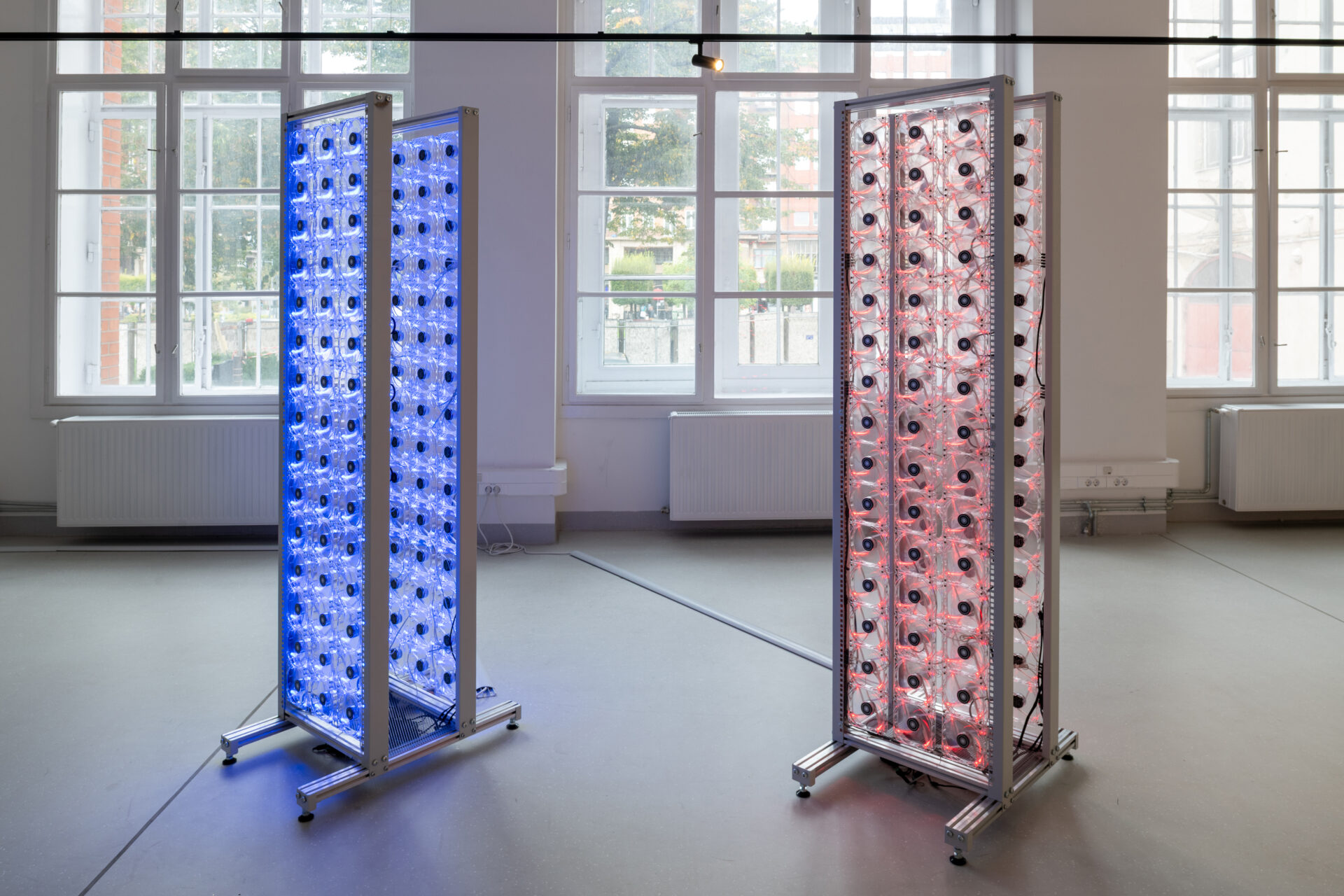
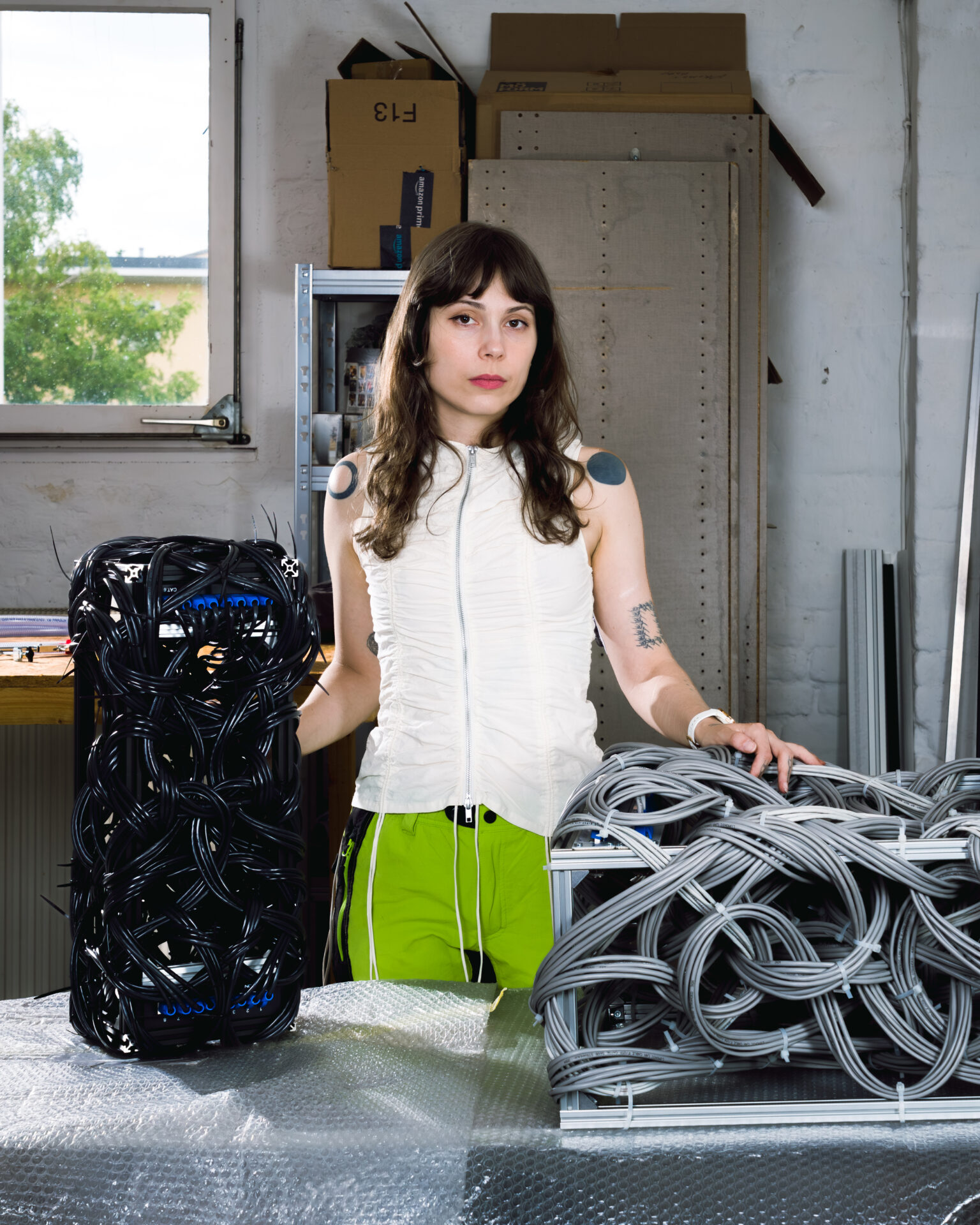
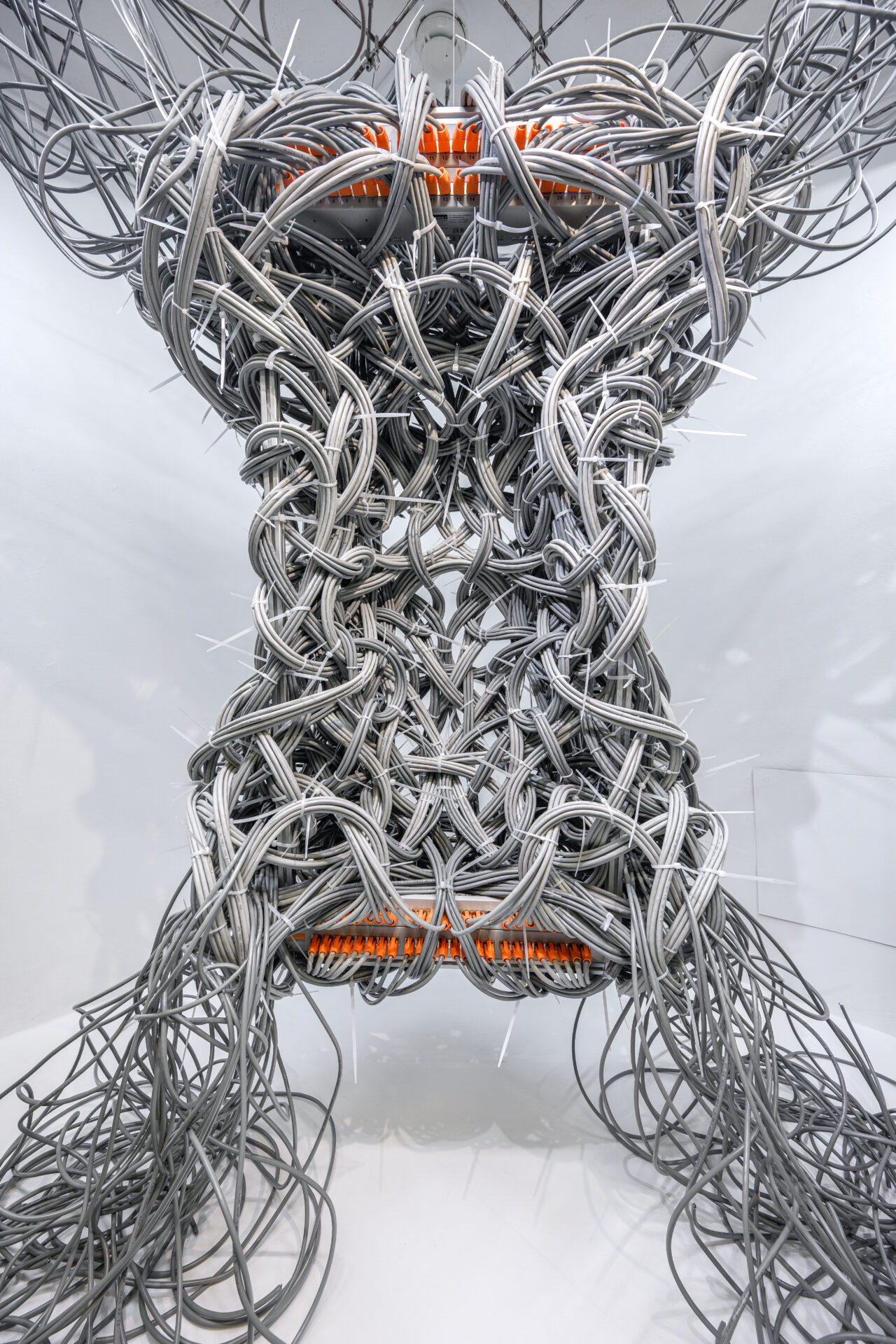
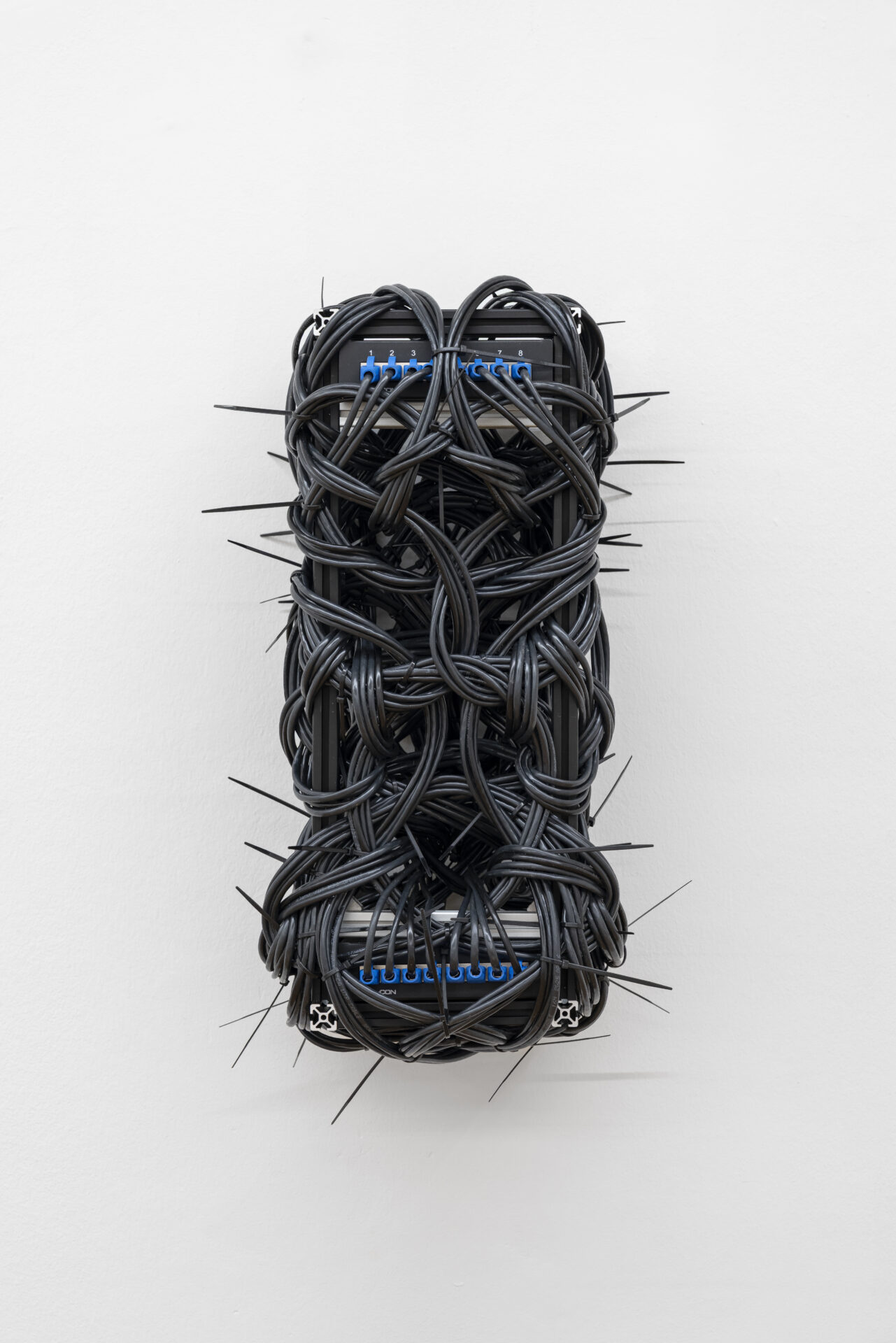
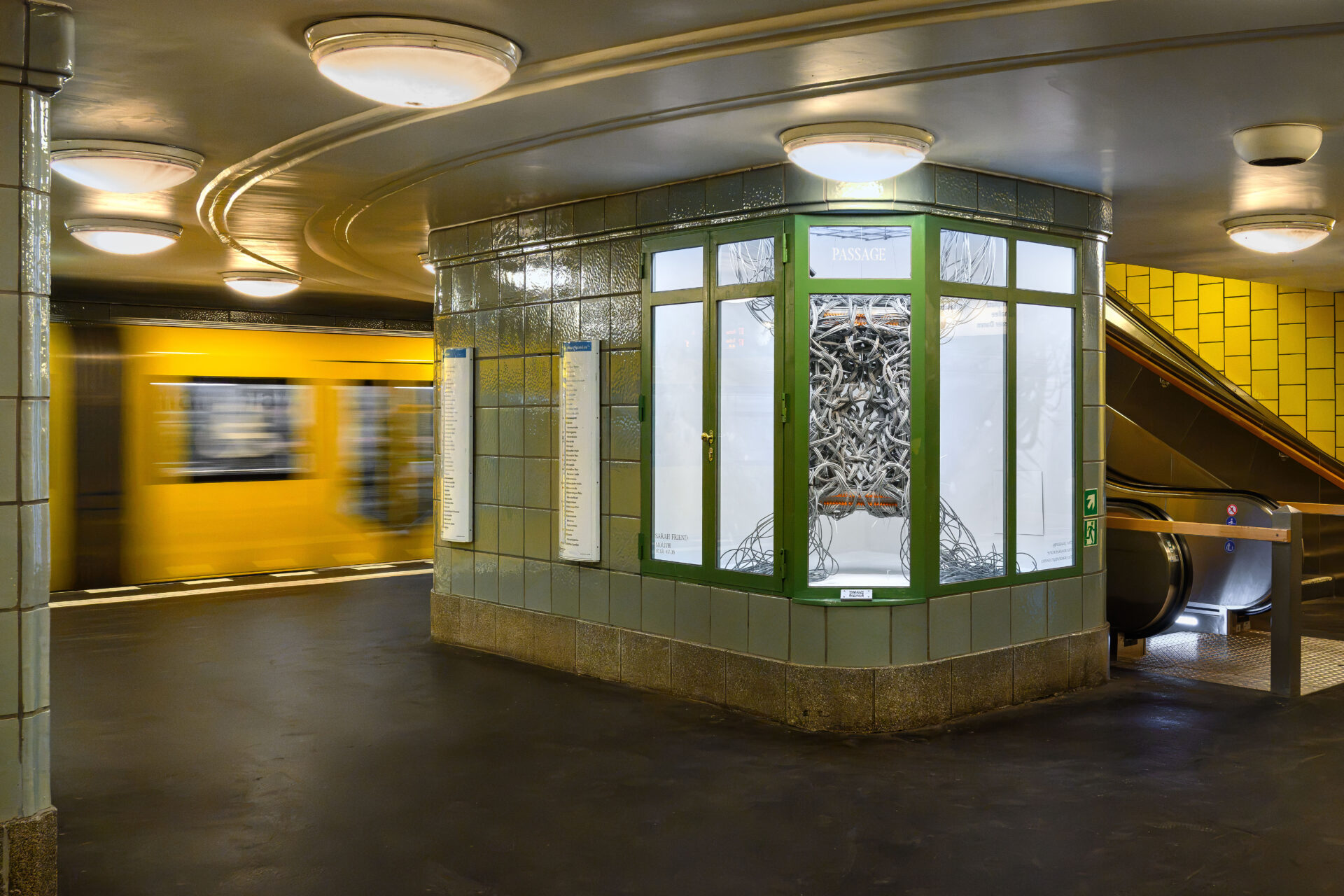
AM Your latest body of work seems very different from Prompt Baby. You’re working with physical materials from data centers and turning cables into sculptures. How did you arrive there?
SF I have a previous body of work about data centers and using materials from data centers as sculptural components, so that’s been part of my practice for some time. I became interested in the cables specifically because of their organic shapes. Visually and aesthetically, I’m interested in moments when machine parts take on lifelike qualities, which I think these twisted cables do. When people see them, they start saying, “Oh, it’s a bit like a brain, or intestines, or maybe an insect.” A lot of the references people make are to living things, which I like quite a bit.
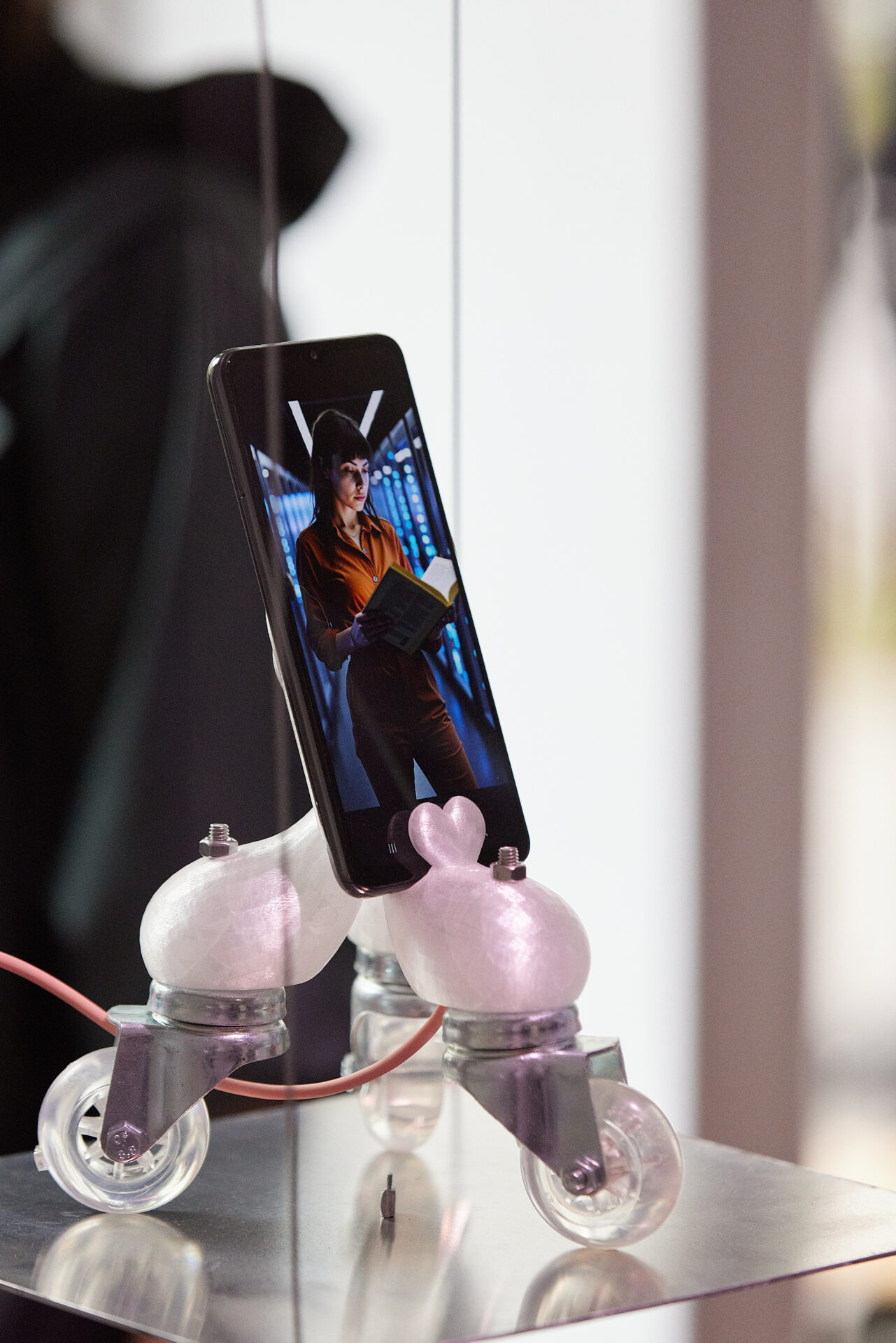
And then there’s “cable porn.” Have you come across that? These are people that work in data centers, posting online the results of their work winding these cables into elaborate configurations. It’s my opinion that this is already an underappreciated folk art practice. But coming out of Prompt Baby, I found that interesting. The reason I started making work about data centers in the first place was that, physically speaking, this is where all of the systems we’re talking about actually operate. And that’s true to an even greater extent with AI. What does your AI girlfriend actually look like? She’s a server rack.
AM At the beginning, you talked about continuing to imagine better systems. Is that becoming more difficult as AI develops so quickly?
SF I’m not a doomer. I’m never a doomer. One of the themes I see throughout my practice is continuing to make space in our imagination for better systems, and I haven’t stopped doing that as AI capabilities accelerate. Am I concerned about the militarization of that technology and growing global violence? Absolutely. But I don’t find it very useful to spiral about it. Might I make work about the military entanglements of AI? Yes, absolutely. The things I worry about culturally tend to become the subjects of future bodies of work.